
Settlements

High Court sanctions looting: Israeli quarries in the West Bank

Image

The resources of an occupied territory are supposed to be used to benefit the local population, unless they are needed for an urgent military purpose. However, in a ruling given on 26 December 2011, Israel's High Court of Justice established a new rule enabling the state and private Israeli enterprises to loot quarries in the West Bank. The decision completely contradicts international law and principles that have guided High Court rulings in the last thirty years. There is cause for great concern that the ruling will enable Israel to treat the West Bank and its resources as if they have been annexed to the state, without taking the human rights of Palestinians into account.
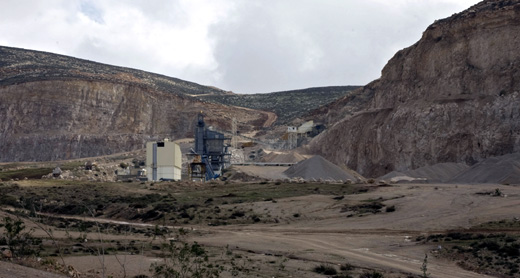
The Kochav Hashachar quarry in the Jordan Valley. Photo: Keren Manor, activestills.org, 8 Feb. '11

The court’s opinion, written by Supreme Court President Dorit Beinisch and joined by justices Miriam Na’or and Esther Hayut, was given in a petition filed by Yesh Din in March 2009 against Israeli entities operating quarries in Area C in the West Bank. On 10 January 2012, Yesh Din filed an application for rehearing, before an expanded panel, on the precedent established by the ruling. In July 2012 the High Court of Justice rejected the request but also stated that the ruling does not constitute a precedent and was given in view of the specific circumstances of the petition.

"Assuming no political changes will occur"

Israeli quarry operations in the West Bank began in the mid-1970s. According to Civil Administration figures, there are now ten Israeli-owned quarries in Area C, eight of them active. All the quarries are in what Israel has declared "state land". According to the state’s estimates, these quarries produce some 12 million tons of mined material a year, 94 percent of which is taken to Israel. The excavated product accounts for one-quarter of Israel’s consumption of mined material.

In 2008, the national outline plan for mining and excavation sites for the construction and paving market, prepared by the Israeli Ministry of the Interior, relied on the assumption that these quarries would continue to supply Israel with material for the coming 30 years, “assuming no political changes will occur in the borders of Area C.” In 2009, the quarry owners paid the Civil Administration royalties of 25 million shekels.

High Court in 1983: occupied area not "open field for economic exploitation"

In its petition, Yesh Din argued that operation of the quarries contravened international law. Super-principles of the international law of occupation, enshrined in sections 43 and 55 of the Hague Regulations, forbid the occupying state to use the natural resources in the occupied territory for its own economic purposes. The occupying state may only use the fruits of these resources for the benefit of the local population or for its imperative military needs.

In the petition, Yesh Din cited a principled decision given by the High Court of Justice in 1983, in which Justice Aharon Barak, relying on interpretation of the said sections 43 and 55, that “the military commander is not allowed to consider the national, economic, social interests of his country to the extent that they do not have an effect on his security interest or on the interest of the local population. . . An area held under belligerent occupation is not an open field for economic exploitation.” Another High Court judgment, given in 2004, also written by Barak, states that, “the passage of time does not expand the authority of the military commander and enable him to take into account considerations other than the proper administration of the region subject to belligerent occupation.”
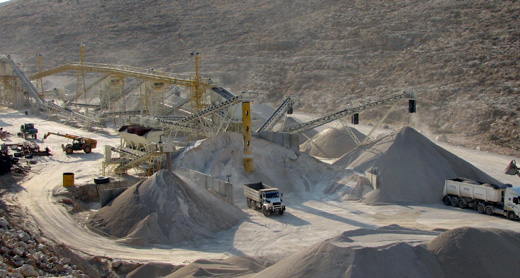
The Natof-Shapir quarry. Photo: Dror Etkes, 3 Nov. '08

In response to the petition, the State Attorney's Office informed the court that the Civil Administration had submitted several recommendations regarding operation of the quarries for the approval of political decision-makers. One of the recommendations was to allow existing quarry work to continue, but, “as a rule,” not to approve new quarries in the West Bank. The Civil Administration also recommended that abandoned quarries be rehabilitated, and that the option of raising the royalties paid by quarry owners be considered. The State Attorney's Office did not inform the court whether the political decision-makers had discussed the recommendations, or when they intended to do so.

In her December judgment, President Beinisch noted that the court should not intervene in the issue of the quarries, as it is a political matter to be settled under the final-status agreement between Israel and the Palestinians. She also held that the filing of the petition more than 40 years after Israeli quarrying began justified its denial, as closing the quarries now would harm the quarry owners and their employees.

New rule: Beinisch accepts "reasonable" economic exploitation

Despite these procedural holdings, Justice Beinisch decided to rule on the substantive question of the occupying state's obligations regarding use of the occupied area's natural treasures. She began by interpreting section 55, which states:

The occupying State shall be regarded only as administrator and usufructuary of public buildings, real estate, forests, and agricultural estates belonging to the hostile State, and situated in the occupied country. It must safeguard the capital of these properties, and administer them in accordance with the rules of usufruct.

Beinisch held that this section grants Israel “the right to utilize natural resources in a reasonable manner,” thereby overturning a fundamental principle of the laws of occupation dating back to the 19th century. In doing so, she failed to cite any legal source supporting her conclusion and relied only on arguments of the State Attorney's Office. She justified this innovative interpretation on the grounds that the Israeli occupation “has unique characteristics, the main one being the period of occupation, which requires the laws be conformed to meet reality on the ground,” by “adopting a broad and dynamic view of the military commander's obligations. She further held that there is a “dispute among experts” regarding quarrying in occupied territory.

In the application for a rehearing, Yesh Din emphasized that the dispute centers only on quarrying that began prior to the occupation and the restriction that should be imposed on expanding such quarrying during occupation; in any case, the organization argued, there is no dispute that the quarrying is supposed to benefit the residents of the occupied territory. Yesh Din also pointed out that President Beinisch misunderstood the manuals issued by the armies of the United States, Britain, and Canada, which she interpreted as permitting quarrying in occupied territory so long as it is not done “negligently.” In fact, these directives emphasize that occupying armies may continue operating existing mines but may not establish new ones. President Beinisch added that Israel’s quarrying is “relatively limited and comes within the category of use of the proceeds that does not damage the capital.” She welcomed the Civil Administration's recommendation not to build new quarries as “expressing a proper position.”

Justice Beinisch: economic exploitation serves Palestinians

President Beinisch then discussed Israel's obligations under section 43 of the Hague Regulations, which states:

The authority of the legitimate power having in fact passed into the hands of the occupant, the latter shall take all the measures in his power to restore, and ensure, as far as possible, public order and safety, while respecting, unless absolutely prevented, the laws in force in the country.

Beinisch argued that, “actually, adopting the literal approach of the petitioner would lead to the military commander not meeting his obligations under international law,” since cessation of operation of the quarries would harm the local population. The reason is that the quarries serve the local population – they provide a “not insignificant amount [of work] for the Palestinian residents,” and royalties that the quarry owners pay funds the military government, “which works to advance projects of one kind or another for the benefit of the region.” The President also accepted the argument that the quarries aid in economic development and modernization of the region, holding that it is “difficult, therefore, to accept the petitioner’s firm assertion that the quarrying activity does not in any way advance the welfare of the region, particularly given the joint economic interests of the Israeli and Palestinian sides and the prolonged period of occupation.”
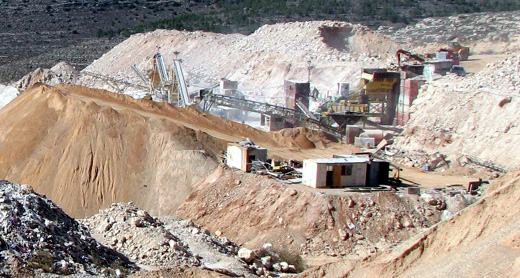
The Betar Illit quarry. Photo: Dror Etkes, 27 Nov. '08

Misguided ruling

The judgment overturns principled decisions of the High Court of Justice that have guided its rulings for the past 30 years; it contradicts international humanitarian law, international law, and international human rights law, and is based on unfounded allegations of fact.

The artificial detachment that Justice Beinisch made between the provisions and interpretation of section 55 and the provisions and interpretation of section 43 enabled complete ignoring of the substantive question whether Israel is permitted to gain economic profit for the state and for Israeli entrepreneurs from quarries inside the occupied territory, without regard to the question of harm to the capital. The rationale in imposing restrictions on use of quarries inside occupied territory is that the occupying state is not the sovereign there, but is only a trustee, and its presence in the occupied territory is temporary and is supposed to cease when the real sovereign replaces it. This rationale continues to exist even when the occupation continues for many years. From this stems the prohibition on economic utilization of occupied territory. The occupying state is not the owner of the natural quarries in the occupied territory, and all it can do is administer them for the benefit of the resident of the occupied territory.

The court’s “dynamic” interpretation, which seeks to modify the provisions of international law on the pretext of “reasonable” use and “prolonged occupation” can be used to sanction theft of other resources, such as the many water resources belonging to Palestinians in the Jordan Valley, where Israel carries out many water drillings that have served settlements in the area since the 1970s, mining of minerals in the northern Dead Sea on the pretext that it is “relatively limited,” or transfer of archeological finds from the occupied territory to Israel. This test may also lead to the absurd conclusion that establishment of the settlements, which international law deems unlawful in occupied territory, is permitted since the built-up area of the settlements accounts for only one percent of the West Bank and the settlements aid the Palestinians by supplying jobs and helping modernize the region.

Furthermore, Beinisch’s holding that Israeli utilization of the material excavated from the quarries in the West Bank is “relatively limited” compared to the mining potential in the entire West Bank is totally baseless. It relies on an absurd Israeli calculation that views the entire West Bank as one gigantic quarry, whereby the anticipated mining from the existing Israeli quarries in the coming 30 years will amount to only half a percent of this potential.

Justice Beinisch’s attempt to argue that the Israeli quarry operations serve the Palestinian population in some ways empties section 43 of meaning and so, too, the obligation of the occupying state to act to benefit the local population. According to the state’s figures, only some 200 Palestinians work in these quarries. The vast majority of the mined material is transported to Israel and used for construction. Beinisch ignores the small amount of royalties, in relation to the profits generated, that the quarry owners pay to the Civil Administration, and the fact that the State Comptroller found, in 2005, that the Civil Administration official in charge of government and abandoned property totally failed in collecting the payments owing to the Civil Administration from the quarries, which generate hundreds of millions of shekels a year for their owners. The state also did not mention even one project carried out with royalty payments that benefits the Palestinians, but made a nebulous claim, which it was not requested to detail, that the royalties were used to “advance one project or another for the welfare of the region.” Beinisch also ignored the enormous damage that the quarries caused to the occupied territory, and the question of their rehabilitation, even though the state refrained from setting a time schedule for rehabilitation, did not specify the cost of the rehabilitation, and did not state who would bear that cost.

The High Court’s judgment constitutes a retreat from the principled-substantive determinations that have guided its decisions over the past 30 years and conformed to international law. Those rulings imposed certain limitations, albeit partial, on Israel, which prevented the state from using the occupied territory as if it had been annexed to Israel’s sovereign territory.

Suggested items

Natural pool, Wadi Qana. Photo: B’Tselem, 27 March 2014

Settlements

Wadi Qana – From Palestinian agricultural valley to settlements’ tourism park

Orange-picking at Wadi Qana. Photo: Iyad Mansur Wadi Qana is one of the tributaries of the Yarkon River. The central section of the wadi, to the east of Qalqiliyah, is in Area C and includes several springs. The land in the wadi in this area is owned by Palestinians, mainly by residents of the nearby village of Deir Istiya who use the land for farming and grazing. Over the course of many generations, and up to the 1990s, village families used to live in the wadi, relying on the springs for drinking water and for irrigating vegetable patches and citrus trees. To this day, residents of Deir Istiya and other neighboring villages go for a dip in the stream and relax on its banks. Between 1978 and 1986, several settlements were established on the hills overlooking both banks of the wadi: Immanuel and Karnei Shomron to the north; Yaqir and Nofim to the south. Later, the settlement of Karnei Shomron expanded to several nearby hills as well. Between 1998 and 2000, the settlement outposts of Alonei Shilo, El Matan, and Yair Farm were established by these settlements. The settlements and outposts discharged their wastewater into the wadi, spoiling the springs and harming the farmers’ water sources. Settlement of Karnei Shomron on slopes of Wadi Qana. Photo: Iyad Mansur In the 1990s, due to the pollution of their drinking water, the fifty Palestinian families who lived in the wadi at the time were obliged to leave it and move to Deir Istiya. The wadi’s springs were also harmed by water drillings undertaken by Israel since the 1970s. The drilling reduced the volume of water the springs discharged which, in turn, reduced the flow of the stream. The pollution and the reduced volume of water made it difficult to maintain irrigation-based farming in the area. Many of the farmers abandoned crops requiring irrigation and began planting trees in the wadi: mostly olive trees since these require very little irrigation, as well as a small number of deciduous fruit trees. In 1983, the Nature Reserves and National Parks Unit of the Civil Administration established the Nahal Qana Reserve, declaring a nature reserve on an area of roughly 1,400 hectares along the valley floor of Wadi Qana and its surrounding slopes. Until a few years ago, the declaration of the Nahal Qana Reserve did not affect the Palestinian landowners, who continued to use the spring water, farm their land in the wadi, and use the area for leisure. Despite the declaration of the nature reserve, the settlements continued to release wastewater into the wadi until 2006, when the recognized settlements were connected to sewage infrastructures and the level of pollution was reduced. However, wastewater from the outposts of Alonei Shilo and El Matan is still being released directly into the reserve, while recurring blockages in the sewage system of the settlements of Nofim and Yaqir also result in occasional pollution of the stream’s water. Wastewater from settlements flow through Wadi Qana . Photo: Bilal Mansur The planned course of the Separation Barrier in the area separates Wadi Qana from the landowners in Deir Istiya, leaving the wadi on the “Israeli” side of the barrier in an enclave of sorts. This situation is similar to that of numerous other enclaves created by the course of the barrier, which are the result of an attempt to link the settlements to Israeli territory and annex additional areas that will be off limits to Palestinians. As in the case of other planned enclaves that will extend deep into Palestinian territory, the Separation Barrier in Wadi Qana has yet to be constructed. Plans to develop Wadi Qana as a tourism site In 2006, the Kana Stream Restoration Authority was established with the goal of restoring the wadi and developing tourism in the area. The authority is made up of four member entities: the settlement of Karnei Shomron, Israel’s Ministry for Environmental Protection, Israel Nature and Parks Authority (INPA), and the Civil Administration. Members of the settlement’s council told the media that one of the goals of the restoration plan was to boost Jewish presence in the area, in response to “Palestinian elements [who are] attempting to take control of the stream.” Map of the area, with Wadi Qana marked in green Also in 2006, Karnei Shomron Council began holding an annual spring walk. During the 2010 walk, Herzl Ben Ari, at the time head of Karnei Shomron Council, stated that the walk was “part of our overall plan to turn Kana Stream into the front yard of Karnei Shomron”. During these walks, the military does not allow Palestinians – including the landowners – to enter Wadi Qana. In 2010, the Kana Stream Restoration Authority launched the Park Kana Project, which is being carried out in cooperation with other settlement councils in the area, representatives of the INPA and the Jewish National Fund, at an estimated cost of between eight and ten million shekels [approx. USD 2-2.5 million]. Over the past few years, implementation of the project has begun. The plan includes the establishment of scenic lookout points in the settlements above the wadi; the construction of a bicycle path running from the outpost of Alonei Shilo to the heart of the reserve – implemented in October 2013 with budgetary support from Israel’s Ministry of Tourism; the construction of a promenade that will encircle the area; as well as signs, information, and the construction of marked INPA paths. Citrus orchard, Wadi Qana. Photo: Iyad Mansur The project was formulated into a master plan, and in November 2013 the Karnei Shomron Council submitted the Kana Stream Master Plan to the planning bureau of the Samaria Regional Council. The plan seeks to transform Wadi Qana into a tourist activity resource, yielding profits for the settlements in the area and attracting new residents. The plan includes the construction of roads connecting the settlements one to another and linking the settlements to the wadi; the construction of scenic routes, bicycle paths, and footpaths connecting the wadi to the settlements above; and the establishment of lookout points, car parks, and picnic sites in the area. Forcing Palestinians out of Wadi Qana Like other Palestinian villages, Deir Istiya is plagued by high rates of unemployment. Due to low wagesm even residents who are employed struggle to support their families. Most of the village’s land is situated in Area C, and Israel prevents use of the land for industrial or commercial purposes. Farmland in the area, including in Wadi Qana, constitutes one of the few sources of livelihood available to the residents. The displacement of Palestinian farmers from Wadi Qana began with the pollution caused by wastewater from the settlements built above the stream. Since the restoration of the stream, displacement continues through the development of the area as an Israeli tourism site. Following this development, the INPA and the Civil Administration have begun imposing severe restrictions on Palestinian farming in the area, claiming that it damages nature in the reserve. In 2010, INPA inspectors raked and destroyed irrigation channels dug by the residents to divert water from the stream to their plots of land. Since 2011, the INPA has kept farmers from planting trees on their land in the wadi by confiscating saplings and uprooting trees. To date, around 1,000 trees have been uprooted and orders served for the uprooting of thousands more trees. In 2012, a number of Palestinian landowners filed a petition with the High Court of Justice against the Civil Administration and the INPA who had issued orders for the uprooting of some 1,500 olive trees. The authorities claimed that the orders were issued against newly planted trees that form part of a “clear trend to farm natural areas” in the reserve, thereby damaging the natural flora, the topography, and the character of the habitat. After negotiations, the representatives of the petitioners and the state agreed that the parties would work together to mark the trees designated for uprooting. In May 2013, the Court granted this agreement the status of a court ruling. While reading their decision, the justices noted that the trees uprooted would have to have been planted during the two years prior to the issuing of the orders, i.e. after April 2010. Nevertheless, the landowners say that in the ensuing months, INPA inspectors also marked trees planted prior to this date. Natural pool, Wadi Qana. Photo: B’Tselem, 27 March 2014 Authorities ignore damage to the nature reserve caused by settlers In contrast to the stringent enforcement measures imposed on Palestinian farmers, Israeli authorities turn a blind eye to illegal activities by settlers in the nature reserve, such as massive construction, building roads, and discharging wastewater into the wadi. In its response to the High Court of Justice petition against the uprooting of trees, the INPA argued that it “looks into any damage within the area of the nature reserve, regardless of the identity of its perpetrator, and recommends the cessation of the [activity causing] damage and the terminating the phenomenon whenever it occurs.” In practice, however, the INPA ignores, or at the very least responds extremely slowly, regarding the following offenses: Approximately 100 homes in the settlements of Yaqir, Nofim, and Karnei Shomron were constructed within the area of the reserve. In 2014, master plans were submitted which provided for the expansion of the settlement of Yakir and the retroactive approval of the outpost of El Matan. These plans include rezoning as residential areas currently defined as a nature reserve. The access road to the outpost of Alonei Shilo was built within the area of the nature reserve. In August 2014, a new road was constructed in the reserve, running from Alonei Shilo to Immanuel. The roadwork was undertaken without a permit and caused damage to the reserve. Work was halted following complaints from Palestinian residents of the neighboring villages. Over six month later, the INPA is still investigating. As noted, wastewater from the settlements above Wadi Qana was released into the stream for about 20 years without hindrance. Even now, the stream continues to be polluted by wastewater from the outposts and when the sewage system serving the settlements malfunctions. Olive grove, Wadi Qana. Photo: Iyad Mansur The natural environment of Wadi Qana is indeed unique and impressive and is worthy of protection. However, traditional Palestinian agriculture in the area forms an integral part of this nature. The conduct of the Israeli authorities – reducing the volume of water in the stream by water drilling in the area; enabling pollution of the stream with wastewater from the settlements – forced Palestinian farmers to alter their agricultural use of the wadi from irrigated crops to olive trees. A genuine effort to restore the wadi must include restoration of the stream’s flow and the cessation of any release of wastewater, enabling the farmers to revert to their former practice of making a living off irrigated crops in the wadi. Even if it is right to declare a nature reserve in the area, such a reserve must first and foremost serve the Palestinian public to whom it belongs. In practice, however, the declaration of a nature reserve in Wadi Qana, as elsewhere in Area C, is mainly intended to exclude Palestinians from their land. Hundreds of thousands of hectares of Area C land – 14% of Area C – have been declared nature reserves or national parks. In all these areas, Israeli authorities keep Palestinians from building and developing and restrict their use of the land, just as they do elsewhere by declaring firing zones and state land. The displacement of the Palestinian farmers from their land in Wadi Qana violates their right to property and to a livelihood. They are being forced out on the pretext of safeguarding local nature, yet no one keeps the settlements from grossly trampling this very same nature. The plans to transform the wadi into a park studded with scenic routes, footpaths, and visitors expose the true purpose underpinning the actions of the INPA and the Civil Administration: strengthening Israeli control of the wadi and appropriating it for the settlements.

23 April 2015

Agriculture

Foul Play

The report warns about the danger inherent in neglecting wastewater treatment in the West Bank. The report criticizes both Israel and the Palestinian Authority for their failures, which have harmed the health and future water supply of all residents of Israel and the West Bank.

28 June 2009

Apartheid

This is apartheid: The Israeli regime promotes and perpetuates Jewish supremacy between the Mediterranean Sea and the Jordan River

Today, B’Tselem published a new position paper that details how the Israeli regime enacts in all the territory it controls (Israeli sovereign territory, East Jerusalem, the West Bank, and the Gaza Strip) an apartheid regime. One organizing principle lies at the base of a wide array of Israeli policies: advancing and perpetuating the supremacy of one group – Jews – over another – Palestinians. In the position paper B’Tselem rejects the perception of Israel as a democracy (inside the Green Line) that simultaneously upholds a temporary military occupation (beyond it). B’Tselem reached the conclusion that the bar for defining the Israeli regime as an apartheid regime has been met after considering the accumulation of policies and laws that Israel devised to entrench its control over Palestinians. The key tool Israel uses to implement the principle of Jewish supremacy is engineering space geographically, demographically and politically. Jews go about their lives in a single, contiguous space where they enjoy full rights and self-determination. In contrast, Palestinians live in a space that is fragmented into several units, each with a different set of rights – given or denied by Israel, but always inferior to the rights accorded to Jews. The Israeli regime pursues this organizing principle in four major areas: Land – Israel works to Judaize the entire area, treating land as a resource chiefly meant to benefit the Jewish population. Since 1948, Israel has taken over 90% of the land within the Green Line and built hundreds of communities for the Jewish population. Since 1967, Israel has also enacted this policy in the West Bank, building more than 280 settlements for some 600,000 Jewish Israeli citizens. Israel has not built a single community for the Palestinian population in the entire area stretching from the Mediterranean Sea and the Jordan River (with the exception of several communities built to concentrate the Bedouin population after dispossessing them of most of their property rights). Citizenship – Jews living anywhere in the world, their children and grandchildren – and their spouses – are entitled to Israeli citizenship. In contrast, Palestinians cannot immigrate to Israeli-controlled areas, even if they, their parents or their grandparents were born and lived there. Israel makes it difficult for Palestinians who live in one of the units it controls to obtain status in another, and has enacted legislation that prohibits granting Palestinians who marry Israelis status within the Green Line. Freedom of movement – Israeli citizens enjoy freedom of movement in the entire area controlled by Israel (with the exception of the Gaza Strip) and may enter and leave the country freely. Palestinian subjects, on the other hand, require a special Israeli-issued permit to travel between the units (and sometimes inside them), and exit abroad also requires Israeli approval. Political participation – Palestinian citizens of Israel may vote and run for office, but leading politicians consistently undermine the legitimacy of Palestinian political representatives. The roughly five million Palestinians who live in the Occupied Territories, including East Jerusalem, cannot participate in the political system that governs their lives and determines their future. They are denied other political rights as well, including freedom of speech and association. In the entire area, control over these aspects of life lies entirely in Israel’s hands – the sole power determining the population registry; land allocation; voter rolls; and the right (or denial thereof) to travel within, enter or exit any part of the area. The Israeli regime has grown increasingly explicit regarding its Jewish supremacist ideology, a process that has seen two major unmasking milestones in recent years. One was the enactment of Basic Law: Israel – the Nation State of the Jewish People, which declares the distinction between Jews and non-Jews fundamental and legitimate, and permits institutional discrimination in land management and development, housing, citizenship, language and culture. The second came in the form of official statements regarding formal annexation of more parts of the West Bank, attesting to Israel’s long-term intentions and debunking claims of “temporary occupation.” B’Tselem stresses that the military occupation has not ended: Palestinians in the West Bank remain its direct subjects, while in the Gaza Strip they live under its effective control, exerted from the outside. At the same time, casting Israel as a “democracy” on one side of the Green Line, while it is “temporarily” occupying millions of people on the other side, is divorced from reality. This depiction ignores the fact that this state of affairs has been in place for over fifty years. It fails to take into consideration the hundreds of thousands of Jewish settlers living east of the Green Line. It glosses over the de-jure annexation of East Jerusalem and the de-facto annexation of the rest of the West Bank. These facts lead to the conclusion that these are not two parallel regimes, but a single one, governing the entire area and all the people living in it. B’Tselem’s Executive Director, Hagai El-Ad: “The fundamental tenets of Israel’s regime, although already implemented for many years, have recently grown more explicit. This happened both with the discussion of de jure annexation after decades of de facto annexation, and with the enactment of the Nation State Basic Law, which took the existing discrimination against Palestinians and turned it into an open constitutional principle. Israel is not a democracy that has a temporary occupation attached to it: it is one regime between the Jordan River and the Mediterranean Sea, and we must look at the full picture and see it for what it is: apartheid. This sobering look at reality need not lead to despair, but quite the opposite. It is a call for change. After all, people created this regime, and people can change it.”

12 January 2021