Dear friends,  September marked 20 years since the beginning of the Oslo Peace Process. And this month, Israeli and Palestinian negotiation teams are once again engaged in new peace talks. There is much skepticism about the potential of this process, but for me one thing is clear: if the new process is to have any hope of improving the lives of people on the ground, it is vital that we learn the human rights lessons of the Oslo Process. September marked 20 years since the beginning of the Oslo Peace Process. And this month, Israeli and Palestinian negotiation teams are once again engaged in new peace talks. There is much skepticism about the potential of this process, but for me one thing is clear: if the new process is to have any hope of improving the lives of people on the ground, it is vital that we learn the human rights lessons of the Oslo Process. While many Israelis and Palestinians consider the Oslo Accords to be obsolete, in fact, they still dictate life in the West Bank. The Accords established the Palestinian Authority and gave it various powers while Israel retained many others as well as overall control. Issues for Palestinians, such as how much water they receive, who grants building permits, who provides them with health and education services, how much they pay in taxes – all of these are regulated by the Oslo Accords, a set of agreements formulated for a five-year interim period that remains entrenched two decades later. Human rights violations carried on side by side with the peace process: Settlements tripled in population and have become a major source of violation of Palestinian rights. At the same time, Israeli policy prohibits Palestinian from building in over 60% of the West Bank. The Palestinian Authority has also violated human rights, including arbitrary detention and torture. Understanding this history is crucial as we look forward. The protection of human rights must form an integral part of any written agreements and their implementation. Clearly, the demolition of Palestinian communities, such as took place last month in the Jordan Valley, is anathema to a genuine peace process. We at B'Tselem will remain vigilant to ensure that the reality on the ground and the legal obligations of all parties are kept squarely on the diplomatic table. I know you share my hope that twenty years down the line, life for Israelis and Palestinians will be far different and much improved.
Jessica Montell
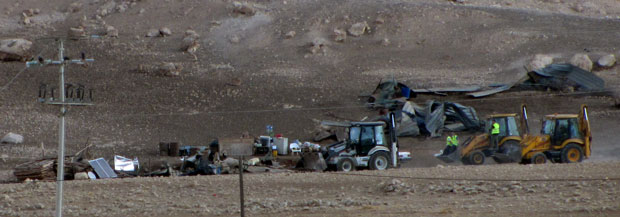
Director, B’Tselem | | | 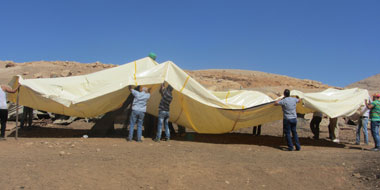 On 16 Sept. 2013 the Israeli military demolished the entire community of Khallet Makhul, a Bedouin community in the Jordan Valley. This demolition is part of ongoing Israeli policies both in the Jordan Valley and throughout the West Bank to prevent development of Palestinian communities in areas where Israel wants to strengthen its claims. As a result, some of the poorest, most marginalized Palestinian communities live in constant threat of harassment and displacement. | | READ MORE >> | | |  On Wednesday, 2 Oct. 2013, Hamas authorities in the Gaza Strip executed Hani 'Alayan, 27. 'Alayan was sentenced to death in 2012 for two counts of murder, one of them committed while he was a minor. His sentence was upheld in appeal on 12 July 2013. Since Hamas seized control of Gaza, 16 people have been executed. B’Tselem condemns the use of capital punishment, which is both immoral and a grave violation of human rights. The state may not take a person’s life and violate that person’s right to life as a punitive measure, even if it is ostensibly for the purpose of law enforcement. | | READ MORE >> | | | 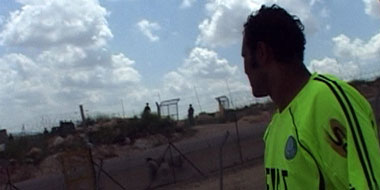 4 and 1/2 years after Bassem Abu Rahmeh, 30, was killed when struck in the chest by a tear-gas grenade fired directly at him from close range, the state announced it is closing the case for lack of evidence. The announcement was made further to a High Court petition by Bassem’s mother, demanding an investigation into the killing of her son in April 2009 during a demonstration against the Separation Barrier in Bil’in. Three video segments prove that Abu Rahmeh was east of the barrier, did not act violently, and did not endanger the soldiers. | | READ MORE >> | | | 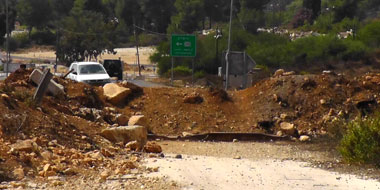 Until the second intifada, Beitin was a thriving commercial center because of its proximity to al-Birah and Ramallah. But economic and social activity in the village has declined after the military blocked off its main entrances, leaving only a long winding access road open. In April 2013, Israeli human rights organization HaMoked requested that the military open the DCO checkpoint on the road between Beitin and al-Birah, which serves only VIP pass holders and members of international organizations to all Palestinians. No response has been received to date. | | READ MORE >> | |
| |