A Routine Founded on Violence
On 12 January 2022, at around 2:00 A.M., several dozen soldiers entered the village of JilJiliya, which lies north of Ramallah, for the second night in a row. They spread out in small groups at intersections, construction sites and among village groves. About an hour later, at around 3:00, 'Omar As’ad, a 78-year-old village resident who lived in the U.S. until 11 years ago, made his way home after visiting a relative. When As’ad reached the village center, about five soldiers ordered him to stop. B'Tselem's investigation found that As’ad argued with them for several minutes, insisting on his right to continue on his way home, and then the soldiers took him out of his car and dragged him forcibly to an intersection, where the argument continued for several minutes. The soldiers then led him to the courtyard of a house that was under construction, about a 100 meters away from the intersection, and left him there on the floor, blindfolded and with his hands tied behind his back. After about half an hour, soldiers arrested four other Palestinians at the same intersection and led them to the same courtyard. They took away their ID cards, cell phones and car keys and ordered them to sit several meters apart from each other. About half an hour later, the soldiers left the yard and the area. At that point, the four Palestinians noticed As’ad, who was lying face down, unconscious, with one hand behind his back and a plastic zip tie still wrapped around the other wrist. A piece of cloth was loosely tied over his eyes, and his kaffiyeh was lying beside him. The village doctor, who was called to the scene, performed CPR on him to no avail. He transferred As’ad to the village clinic, where he continued the resuscitation attempts, but pronounced him dead several minutes later. An autopsy performed by doctors from the Palestinian Center for Forensic Medicine found two bruises on As’ad’s head and established that he died as a result of "a heart attack caused by mental stress due to the external violence he experienced." B'Tselem's investigation indicates that the soldiers arrested passersby who were not suspected of any wrongdoing, at the dead of night. They treated As’ad with severe violence, as though he was not a human being, from the moment they ordered him to stop: pulling him forcefully from his car, tying his hands, blindfolding him, pushing him violently into the courtyard, and throwing him carelessly to the ground. Before leaving, they took the zip ties off ‘As’ad’s wrists, in utter indifference to the fact that he was unconscious and possibly dead, and left him lying there without extending first aid or calling an ambulance. Israel’s whitewashing system kicked into motion immediately. As As’ad was an American citizen, and the circumstances of his death drew exceptional public attention – the various mechanisms adjusted accordingly. Chief of Staff Aviv Kochavi himself addressed the incident, going so far as to call the soldiers’ conduct “grave and unethical.” OC Central Command Maj. Gen. Yehuda Fuchs called it “a moral failure”. Yet these empty words were meant solely to defend the military’s image. After all, as soon as the operational investigation was completed, its insignificance quickly became clear: the battalion commander was reprimanded, and two other commanders were removed from their positions and barred from command roles for two years. As usual, the military announced the launch of an MPIU investigation into the incident. Yet B’Tselem’s years of experience indicate that this investigation, too, is part of the MAG Corps’ sophisticated whitewashing system. Its primary purpose is to silence criticism directed at the military – and at Israel – over the incident. It is not intended to uncover the truth or to hold those responsible accountable, and is certainly not meant prevent the recurrence of such cases or ensure As’ad’s family even a modicum of justice. R.Q. (62) lives near the intersection where the soldiers detained As'ad and the four other Palestinians. In a testimony he gave B'Tselem field researcher Iyad Hadad the day after the incident, he recounted: On Wednesday, 12 January 2022, at 3:00 A.M., I was still awake and saw on the village's Facebook page that there were 50 soldiers near my house. I looked out the kitchen window and saw five or six soldiers at the intersection by my house, detaining a vehicle that was facing east. The driver and the soldiers argued loudly for five minutes, and then the soldiers pulled the man out of his seat and out of the car, and pushed him to the corner of the intersection. They continued arguing and shouting there for a few minutes. Then I saw the soldiers push him ahead of them along a dirt road. I saw something covering his head, but I don’t know if it was a bag or his coat or something else. I think his hands were tied, because I saw two soldiers holding him by his hands. I didn't see them beat him, but they treated him violently. Then I lost sight of them. Mraweh ‘Abd a-Rahman (51), a vegetable seller from 'Arura, and his partner, 'A.H. (56) from 'Ebwein, were detained by the soldiers at the same intersection at around 3:30 A.M. The soldiers ordered them to drive down a dirt road until they reached the entrance to a house, where they ordered them to go into the courtyard and sit down. In a testimony he gave B'Tselem field researcher Iyad Hadad on 12 January 2022, Mraweh 'Abd a-Rahman described what happened next: The soldiers ordered us to drive on until we stopped behind a private car that was parked opposite a house in the final stages of construction. There, they took us out of the car. My partner 'A.H. and I couldn’t see each other in the dark. They searched me, took my ID card, led me into the courtyard of the house and made me sit down on the ground in a corner. After that, I heard them bring 'A.H. in. I was drowsy and exhausted. At around 4:00 A.M., I was woken when one of the soldiers kicked my foot. He was walking past me, and I think there were two or three other soldiers with him. They gathered around someone, a few meters away from me, for several seconds. A few minutes later, they left the courtyard. They didn't give us back our ID cards or the car keys. We started looking around us to make sure they were really gone. A few minutes after 'Abd a-Rahman and 'A.H. were detained, Zayed Muhammad (56), a vegetable seller from 'Ebwein, and his partner H.M. (55) arrived at the same intersection, in a truck Muhammad was driving. The soldiers ordered him to stop and told his partner to get out. They ordered Muhammad to turn onto a dirt road and drive towards the house, with H.M. walking beside the truck. In a testimony he gave B'Tselem field researcher Iyad Hadad on 14 January 2022, Muhammad related: They led us to the courtyard of a villa that was in the final stages of construction, and sat me down next to my partner. There were two or three other people there, sitting on the ground. It was hard to see them because it was dark and the pallets and construction material obscured my vision. Also, the soldiers didn’t let us raise our heads, move or talk to each other, and kept saying, "Quiet, shut up." I thought they were in the middle of an arrest operation. We didn't know what was going on. In the dark, I could only make out soldiers coming and going inside the courtyard, or opposite it, or on the dirt road. I didn't see any movement of military vehicles. We stayed like that for about half an hour. Five minutes before the soldiers left, a soldier passed by me and kicked me in the leg. He seemed in a hurry. He stood with two or three other soldiers around something. It was hard to see them and I didn't understand what they were doing. In his testimony, 'Abd a-Rahman described what happened after the soldiers left: I took a few steps to the right, and my foot bumped into something. I looked down and saw that it was the leg of a person lying there. I told the others there was a person there. 'A.H. didn't believe me and told me it was a sack of cement. I bent down and touched it and saw that it was a human body, covered in a coat. He wasn't moving. One of the other detainees, Zayed Muhammad, had managed to find our ID cards and cell phones thrown on the roof of a car outside the house. He turned on the flashlight on his phone and then I recognized the person who was lying there. It was 'Omar As'ad, known as Abu Hani, a resident of Jiljiliya. He was lying face down, with one hand bent backwards as if it was still tied. Next to it were cut-off zip ties. His other hand still had the zip tie on it. He had a loose blindfold over his face. I think that when the soldiers gathered next to me before they left, they cut off the zip ties and loosened the blindfold, but they did nothing else to give him first aid or try to save his life. Zayed Muhammad and his partner went to fetch a doctor from the nearest clinic. 'A.H. and I tried to talk to As'ad and wake him up, but he didn't wake up. 'A.H. shone with the flashlight from his phone and I put my hand on the arteries in ‘As’ad’s neck and wrist, but didn't feel a pulse. A few minutes later, Muhammad and his partner returned to the courtyard with Dr. Islam Abu Zaher (30). In a testimony he gave B'Tselem field researcher Iyad Hadad on 12 January 2022, Dr. Abu Zaher recounted what happened next: I saw a person lying face down. I turned him over and recognized him as 'Omar As'ad (Abu Hani), who is a patient at our clinic. He wasn’t in good health – he had heart trouble and diabetes and had open-heart surgery five years ago. He still had a loose blindfold on, a zip tie on one hand, and a cut-off zip tie next to him that had probably been on the other hand, which was bent backwards. There was a red kaffiyeh next to him, which I know he regularly wore. I examined him. The first thing that caught my attention was the noticeable cyanosis (blue discoloration) on his face. He wasn't breathing, and there was no pulse or any other vital sign. Usually, when a person reaches that level of cyanosis, it means he’s been dead for at least 15 or 20 minutes. I saw no signs indicating a medical intervention or even attempts to provide first aid, either on his body or nearby. I immediately started CPR. I massaged his heart for about 10 minutes, but he didn't respond. I decided to transfer him to the clinic to complete the CPR. I instructed one of the people next to me how to continue the CPR in the meantime, and went to get a stretcher from the clinic, which is about 150 to 200 meters away. On the way to the clinic, it was impossible to massage his heart while he was on the stretcher. We got to the clinic within two minutes and I continued the CPR there, at first with my hands and then with a defibrillator, but there was no response. I pronounced him dead 20 or 25 minutes after I first got to him. In a testimony she gave B'Tselem field researcher Iyad Hadad on 24 January 2022, Nazmiyah As'ad (79), 'Omar As'ad's widow and a mother of five, described her life since her husband's death: The news of my husband's death was a shock. I only started to grasp what was happening around me after the mourning was over. I found myself alone and drained of energy. I thought back on our entire life together, from the time we got married and went to the US, and when we had the kids, until the day he was killed. I remembered the good days we had and the bad ones, too. My husband, Haj ‘Omar, may God rest his soul, was warm, kind, well-liked, helpful, generous and resourceful, and he had a good sense of humor. There's hardly anyone in the village, young or old, who didn't know Haj 'Omar or Abu Hani, as they called him. He was sociable and regularly attended people's celebrations and days of mourning. I miss him, and so do all the residents of the village and the area. Now I'm home alone, with no one to help me. All of our children live in the US. My husband used to give me my medication for high blood pressure and diabetes, and would help me with day-to-day tasks because I'm an elderly woman and use a cane. Who will give me my medication? Who will buy groceries? Who will sit next to me at the dinner table? Who will be by my side and take me to the doctor and back? Only God knows how long I'll outlive him, whether it will be days or months. In any case, it will be a sad life, pointless and soulless. Sometimes, I wake up and call out to him in my sleep. Since we came back to the village 11 years ago, we haven’t been able to visit the US because we no longer have West Bank ID cards and overstayed the time that was allotted to us when we entered. We were afraid that we wouldn't be allowed back here if we left. We applied for ID cards, but every time we asked and checked with the Palestinian Authority's Civilian Affairs Department, we were told there was still no answer from the Israelis. We waited patiently, hoping we'd get ID cards so we could go back to the US and see our sons and daughters and grandchildren. We missed them very much. Yesterday, I was told that my name and my husband's name are on the list of people about to get ID cards. What use is that when the card holder is dead? Learning that only made my pain and heartbreak worse. I don’t need a card now that my husband's gone. Update: On 12 January 2022, media reports stated that an MPIU investigation had been launched. On 6 September 2022, the media reported the investigation had concluded and the MAG Corps was “expected to make a decision on possible legal action shortly.”
3 March 2022

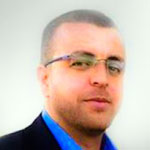 B'Tselem Executive Director Hagai Elad this morning sent a letter to Prime Minister Benjamin Netanyahu requesting the immediate release of journalist Muhammad al-Qiq. Al-Qiq, 33, has been on hunger strike for 86 days protesting his administrative detention and is in a serious condition. In the letter, Elad criticizes the HCJ ruling that rejected al-Qiq’s request to be transferred to hospital in Ramallah with the justices arguing that if the security establishment sought to detain al-Qiq again in the future, this would endanger soldiers’ lives.


