
List of B'Tselem's demands for investigation of harm to unarmed civilians in Operation Cast Lead
18 January 2012, updated 14 September 2014

After Operation Cast Lead in the Gaza Strip, B'Tselem wrote to the MAG Corps demanding investigations of the Military Police Investigation Unit (MPIU) into 20 incidents that had taken place during the operation. In each of the incidents, B'Tselem's field research raised serious suspicions that military actions had harmed unarmed, uninvolved civilians, in violation of international humanitarian law.
A description of the incidents follows.
Five members of the Bau’lusha family killed – MPIU investigation not yet launched
On 29 December 2008, the military bombed a mosque in the center of the Jabalya refugee camp without warning residents living close by. As a result of the bombing, six nearby houses collapsed, among them the Bau’lusha family's home. Five daughters of the family were killed: Jawaher, 4, Dina, 7, Samar, 12, Ikram, 14, and Tahrir, 17. Their four siblings were injured, as were ten residents of nearby houses.
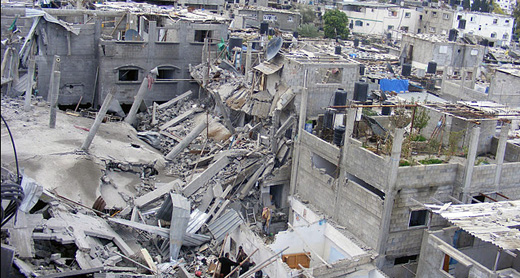
The ruins of al-‘Aqel Mosque and, adjacent to it, the Bau’lusha family's home. Photo: Muhammad Sabah, B'Tselem, 30 March '09.
B'Tselem’s letter to the MAG Corps, Hebrew, PDF
On 14 November 2013, the MAG Corps notified B'Tselem that no investigation was to be opened into the incident. The reason provided was that "the attack was aimed at a mosque that was being used by terror organizations to store weapons and money… Prior to the attack, various precautions were taken to reduce harm to civilians, including choice of appropriate munitions. The attack was aimed at a clear military target, and the necessary precautions were taken in carrying it out" [emphasis in the original].
Click here to read the testimony give by Samira Bau'lusha, the mother, several days after the incident.
Eight persons killed while loading oxygen tanks onto a truck – no MPIU investigation opened
On the evening of 29 December 2008, the air force bombed a truck in the area of Jabalya on which oxygen tanks were being loaded. Eight persons were killed, four of them minors: Muhammad Madi, 17, Wisam ‘Eid, 14, Mahmud Ghabayen, 14, and Ahmad Khilleh, 15. Two other persons were injured. .
B'Tselem’s first letter to the MAG Corps, Hebrew, PDF
B'Tselem's second letter to the MAG corps Hebrew, PDF
On 1 January 2012 the MAG Corps informed B’Tselem that the application had not been found.
Click here to read the shop owner's testimony.
Three children from the al-Astal family killed – no MPIU investigation opened
On 2 January 2009, an air force unmanned aerial vehicle (UAV) bombed a street in the al-Qarara neighborhood of Khan Yunis, in which children were playing. Three children were killed: ‘Abed Rabo al-Astal, 8, Muhammad al-Astal, 11, and ‘Abd a-Satar al-Astal, 11. They were relatives.
B'Tselem’s letter to the MAG Corps, Hebrew, PDF
On 1 January 2012 the MAG Corps informed B’Tselem that the application had not been found.
Click here to read a testimony on the incident.
21 members of the Samuni family killed – MPIU investigation file closed, no legal steps taken
On 4 January 2009, soldiers gathered about 100 members of the extended a-Samuni family in the house of Wael a-Samuni, in the a-Zeitun neighborhood of Gaza City. The next morning, at 6:30 A.M., when a few members of the family tried to leave the house, the military fired a missile or shell at them, killing Muhammad a-Samuni and wounding two other persons. A few seconds later, the military fired two more shells or missiles that hit the house directly. The house collapsed on its occupants, killing 21 persons, including many women and children, and injuring dozens of other family members. Despite repeated requests by the Red Cross, B'Tselem, and other human rights organization, the army prevented removal of the injured people for two days, until 7 January. After the wounded persons were evacuated, the army demolished the house with the dead bodies inside. It was only possible to remove them from under the debris after the army withdrew, about two weeks later. Among those killed were nine children: Muhammad, 6 months old, Mu’atasem, 1, ‘Azzah, 2, Nassar, 5, Fares, 12, Ishaq, 13, Razaqeh, 14, Isma’il, 15, and Huda, 16.
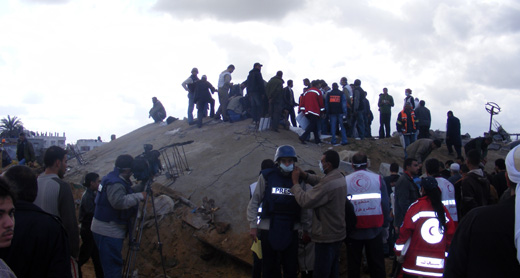
Removal of the bodies at the end of Operation Cast Lead from the ruins of the house where soldiers had gathered the a-Samuni family. Photo: Muhammad Sabah, B'Tselem, 18 Jan. '09.
B'Tselem’s letter to the MAG Corps, Hebrew, PDF
On 13 May 2013 the MAG Corps informed B’Tselem that the investigation file had been closed on 11 April 2012.
 Click here to read the testimony of Maysaa a-Samuni, who managed to free herself and her infant daughter from the ruins.
Eight members of the Abu Halima family killed – MPIU investigation file closed, no legal steps taken
On 4 January 2009, the army fired a white-phosphorus shell that directly hit the house of the Abu Halima family in al-’Atatrah, in the northern Gaza Strip. The father of the family, Sa’dallah, was killed by the shell itself. The phosphorous then ignited and set the house aflame. Four of the children in the family were burned to death: Shahd, 1, Hamzah, 7, Zeid, 10, and ‘Abd a-Rahim, 13. Their sister-in-law, Ghadah, and her infant daughter, were severely burned. Family members who had not been injured tried to take the bodies and the wounded people to hospital. On their way there, soldiers fired at them, killing two people: Muhammad, 16, and Matar, 17. Ghadah and her infant daughter managed to reach the hospital, where Ghadah died from her injuries on 29 March 2009.
B'Tselem’s letter to the MAG Corps, PDF
On 1 January 2012 the MAG Corps informed B’Tselem that the investigation file had been closed on 19 July 2010.
Click here to read the testimony of Ghadah a-Halima, who died from her injuries after several months.
Three-year-old Wiam al-Kafarneh killed – no MPIU investigation opened
On 4 January 2009, the military bombed the Kafarneh family's home in Beit Hanun, in the northern Gaza Strip, without warning the family. Bomb fragments struck Wiam al-Kafarneh, 3, in the head. She died in hospital the next day. Her mother and one of her brothers were also injured, and the house was completely destroyed.
B'Tselem’s letter to the MAG Corps, Hebrew, PDF
On 13 May 2013 the MAG Corps informed B’Tselem that a decision was made not to launch an MPIU investigation on the grounds that “no indications that sustain the suspicion of a criminal offense had been found”.
Click here to read the testimony given by Wiam’s father.
Majedah and Rayah Abu Hajaj killed – MPIU investigation effectively closed after indictment filed for “manslaughter of anonymous person”, case resolved in plea bargain
On 4 January 2009, the military shelled the Juhor a-Dik neighborhood of Gaza City. After the Abu Hajaj family's home was struck, the family decided to obey the military’s orders and left the neighborhood together with the Safdi family. The two families, comprising 31 persons – 21 of them children – left the neighborhood in a procession, carrying white flags. As they were passing through an open field, a tank opened fire at them, killing Majedah Abu Hajaj, 37, and wounding her mother, Rayah Abu Hajaj, 64. The others fled, carrying Rayah with them. She died shortly after. The bodies of the two women remained out in the open for two weeks, until the operation ended, as the military did not permit rescue teams to enter the area.
B'Tselem’s letter to the MAG Corps, Hebrew, PDF
On 6 July 2010, the IDF Spokesperson stated that the investigation of the incident had revealed major disparities between the accounts provided by the Palestinian witnesses and by the soldiers, making it impossible to criminally tie the incident described by the Palestinians to the incident described by the soldiers. Therefore, a soldier was indicted not for killing Majedah and Rayah Abu Hajaj, but for "shooting at a figure". On 12 August 2012, the soldier was convicted in a plea bargain of two offenses: unlawful use of a weapon and inappropriate conduct.
‘Atiyyah a-Samuni and 4-year-old son, Ahmad, killed – MPIU investigation closed, no legal steps taken
On 4 January 2009, soldiers came to the house of ‘Atiyyah a-Samuni in the a-Zeitun neighborhood of Gaza City. Twenty members of his family were gathered there. The soldiers called a-Samuni to come outside. When he got to the door, they ordered him to raise his hands. Then, for an unknown reason, they shot and killed him. The soldiers continued to fire into the house, seriously wounding his four-year-old son, Ahmad, in the chest, as well as five other members of the family. After the shooting, the soldiers ordered the family to take the wounded persons and leave the house, leaving the father’s body behind. The family members tried make their way on foot to a hospital, but soldiers that they encountered forbade them to continue. They found refuge in a house and called for an ambulance, but were told that the ongoing gunfire and the army’s presence made it impossible for an ambulance to get there. The next morning, Ahmad a-Samuni died of his wounds.
B'Tselem’s letter to the MAG Corps, Hebrew, PDF
On 13 May 2013 the MAG Corps informed B’Tselem that the investigation file had been closed on 5 June 2012.
Click here to watch a video testimony on the incident.
Shafiq Daher used as "human shield" – MPIU investigation closed, no legal action taken
On the afternoon of 4 January 2009, soldiers came to the building in which Shafiq Daher, 53, lived in ‘Izbat ‘Abd Rabo, in the Jabalya refugee camp. Daher let them in. After searching the building, the soldiers ordered him to gather all the building’s occupants on the first floor. The next morning, until the afternoon, soldiers wearing bullet-proof vests and helmets ordered Daher to walk in front of them, threatening him with their weapons. Despite his objections, the soldiers forced him to enter five houses in the area and gather the occupants of each house in one room. Only then did the soldiers enter each house and search it. During the search in the fifth house, an exchange of gunfire broke out, and the soldiers ordered Daher to take cover in the stairwell. Several hours later, when the firing ceased, the soldiers forced Daher to enter one of the houses they had previously searched, where he remained until 7 January, together with the persons who lived there.
B'Tselem’s letter to the MAG Corps, Hebrew, PDF
On 1 January 2012 the MAG Corps informed B’Tselem that the investigation file had been closed on 6 July 2010.
Amal ‘Aleiwa and four of her children killed – no MPIU investigation opened
On 5 January 2009, soldiers fired a shell or missile at the apartment of the ‘Aleiwa family, on the fourth floor of a residential building in the a-Shujai'yah neighborhood of Gaza City. Eleven persons were in the apartment. The firing killed Amal ‘Aleiwa, 40, and four of her children: Isma’il, 6, Lana, 9, Muamen, 12, and Mu’atasem, 13. Four other members of the family were wounded and taken to a-Shifaa Hospital. The blast caused extensive damage to the apartment.
B'Tselem’s letter to the MAG Corps, Hebrew, PDF
On 13 May 2013 the MAG Corps informed B’Tselem that on 28 May 2012 a decision was made not to launch an MPIU investigation on the grounds that “no indications that sustain the suspicion of a criminal offense had been found”.
Muhammad Amin Heji, Shahd Heji, Muhammad Samir Heji and ‘Ula ‘Arafat killed – MPIU investigation closed, no legal action taken
On 5 January 2009, the military fired a shell at the Haji family's home in the a-Zeitun neighborhood of Gaza City. The father of the family, Muhammad, 37, was killed and two of his daughters were injured. Approximately five minutes later, several dozen soldiers came to the house and ordered the family to go to next door, to the house of Muhammad’s brother, where they then confined some thirty members of the family.
After several hours, soldiers ordered the women to leave the house and allowed two of the men to go with them. The women and two men left the house and were joined by the Samir Heji family, bringing the group to a total of 39 people. Later, 12 members of the ‘Arafat family joined them too.
When the large group stopped to rest, a soldier who was nearby fired into the air and ordered them to continue walking. The families got up, but before they could leave the spot, soldiers opened fire at them, killing ‘Ula ‘Arafat, 27, and wounding seven others. Two of the children, Shahd Heji, 3, and Muhammad Heji, 15, died of their wounds.
B'Tselem’s letter to the MAG Corps, Hebrew, PDF
On 13 May 2013 the MAG Corps informed B’Tselem that the investigation file had been closed on 16 December 2012.
Five members of the Abu ‘Easheh family killed – no MPIU investigation opened
On 5 January 2009, the military bombed the home of the extended Abu ‘Easheh family in the Nasser neighborhood of Gaza City. Thirty members of the family were hiding in the basement at the time. The house collapsed on them, killing five persons: ‘Omar and Nahil Abu ‘Easheh, and three of their children: Sayed, 12, Muhammad, 9, and Reyda’, 8. Other members of the family were injured, most of them lightly.
B'Tselem’s letter to the MAG Corps, Hebrew, PDF
On 13 May 2013 the MAG Corps informed B’Tselem that on 28 May 2012 a decision was made not to launch an MPIU investigation on the grounds that “no indications that sustain the suspicion of a criminal offense had been found”.
Six persons killed in the yard of the ‘Abd a-Dayem family – MPIU investigation closed, no legal action taken
On 5 January 2009, a tank fired flechette shells at the Abu ‘Arfah family's home in Khan Yunis, in whose yard a tent had been erected to mourn a family member who had been killed. Shell fragments hit five persons, wounding them, The next day, two shells, at least one of them a flechette, were fired into the yard, killing three persons on the spot and injuring ten persons, three of whom later died of their wounds. The six persons killed were: ‘Arafat ‘Abd a-Dayem, 12, Islam 'Abd a-Dayem, 16, and Wafa Abu Jarad, 21, Nafez ‘Abd a-Dayem, 22, Sa’id ‘Abd a-Dayem, 28, and Maher ‘Abd a-Dayem, 32.
B'Tselem’s letter to the MAG Corps, Hebrew, PDF
On 1 January 2012 the MAG Corps informed B’Tselem that the investigation file had been closed on 13 July 2010.
Sami Muhammad and Ra’d Abu Seif used as human shields – MPIU investigation closed, no legal action taken
Shortly after midnight on 5 January 2009, soldiers came to the house of Sami Muhammad, 47, in the ‘Izbat ‘Abd Rabo section of the Jabalya refugee camp. They brought his neighbor, Ra’d Abu Seif, with them. The soldiers entered the house, searched it, and gathered all the occupants on the first floor. The next morning, one of the soldiers ordered Muhammad and Abu Seif to walk out of the house in front of him. Dozens of soldiers were outside the house. The soldiers stood Muhammad in the front, with three soldiers behind him, Abu Seif behind them, and other soldiers behind Abu Seif. The rest of the soldiers walked behind the others. The soldiers then forced Muhammad him to enter neighboring houses before them, threatening him with their weapons. When firing began at one of the houses, soldiers forced Muhammad to walk onto the balcony of the house and hid behind him.
Despite Muhammad and Abu Seif's objections, the soldiers forced the two to walk before them until evening, while an exchange of fire was going on in the area, and even placed the two men between the fighting sides. At the end of the day, soldiers made the two men enter one of the houses that they had broken into earlier, where they remained until 7 January together with the occupants.
B'Tselem’s letter to the MAG Corps, Hebrew, PDF
On 13 May 2013 the MAG Corps informed B’Tselem that the investigation file had been closed on 21 March 2012.
11 members of the Dib family killed, the al-Fakhurah school in Jabalya refugee camp shelled – no MPIU investigation opened
On 6 January 2009, the military fired mortar shells at a site from which Palestinians had, apparently, fired mortar shells previously. The shelling struck near a school in which Palestinians who had fled from their homes at the army’s order had sought refuge, and next to houses of civilians. 36 persons were killed: 32 civilians, three armed militants, and one person whom B'Tselem does not know if he was participating in the hostilities. Among the fatalities were 11 members of the extended Dib family who were, at the time of the shelling, in the yard of their house: Nur, 3, Asil, 9, ‘Issam, 13, Mustafa, 13, Muhammad Mu’in Safiq, 16, Amal, 36, Alaa, 19, Fatmeh, 21, Muhammad, 23, Shamma, 67, and Samir, 44.
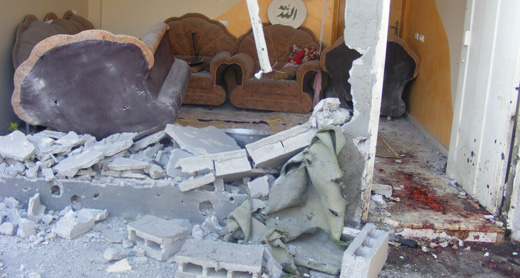
The Dib family’s home following the shelling. Photo: Muhammad Sabah, B'Tselem, 7 Jan. '09.
B'Tselem’s letter to the MAG Corps, Hebrew, PDF
On 13 May 2013 the MAG Corps informed B’Tselem that on 13 May 2012 a decision was made not to launch an MPIU investigation on the grounds that “the firing in the area had taken place on justified operational grounds and carried out properly in response to effective mortar fire targeting an IDF force”.
Click here to read a testimony on the incident.
‘Ata ‘Azzam and two of his children killed – MPIU investigation closed, no legal action taken
On 6 January 2009, the military fired a flechette shell into the yard of ‘Ata ‘Azzam's (46) home, killing him and two of his sons, who were in the yard: Hassan, 3, and Muhammad, 13.
B'Tselem’s letter to the MAG Corps, Hebrew, PDF
On 13 May 2013 the MAG Corps informed B’Tselem that the investigation file had been closed on 2 January 2012.
Ibrahim Abu Tir and the brothers Ibrahim and Muhammad Abu Daqah killed – no MPIU investigation opened
On 8 January 2009, the military fired a missile into al-Ihsan Street, in the ‘Abasan al-Kabira neighborhood of Khan Yunis, while four persons were passing by. The blast killed the brothers Ibrahim and Muhammad Abu Daqah. Another person, Ibrahim Abu Tir, was critically wounded and died in hospital later that day.
B'Tselem’s letter to the MAG Corps , Hebrew, PDF
On 13 May 2013 the MAG Corps informed B’Tselem that on 22 August 2012 a decision was made not to launch an MPIU investigation on the grounds that “the attack was made at a person who had been implicated as firing mortar shells at an Israeli community”.
Rawheyeh a-Najar killed – investigation closed, no legal action taken
On 12 January 2009, the army entered the Khuza’a area in the Khan Yunis District, in the central Gaza Strip, firing massive rounds of gunfire and bulldozing houses. The soldiers called out to residents on loudspeakers, ordering them to leave their homes. A group of people who were getting organized to leave began walking, with Rawheyeh a-Najar, 47, in the front, waving a white flag. Soldiers in a nearby house fired at her, seriously wounding her. They then fired at a relative who tried to evacuate her, hitting the relative in the leg. The group fled. Rawheyeh a-Najar remained lying in the street, and soldiers did not allow anyone to approach her. She died there the next day. When a neighbor of hers, Muhammad a-Najar, tried to remove her body while carrying a white flag, soldiers shot him to death.
On 13 May 2013 the MAG Corps informed B’Tselem that the investigation file had been closed on 16 June 2010.
Click here to view a testimony on the incident.
B'Tselem’s letter to the MAG Corps, PDF
Five members of the Ermelat family killed – MPIU investigation noy yet opened
On 14 January 2009, the military fired a missile at the Ermelat family's home in Sheikh Zayed, in Beit Lahiya. The family members, who were not home at the time, came there the next day to see what had happened to their house. While they were there, the military fired a missile or shell at the house without warning, killing five of them: Arij Ermelat, 2 months old, Baraa Ermelat, 1, Sabrin Ermelat, 15, Amal Ermelat, 33, and 'Aishah Ermelat, 67.
B'Tselem's letter to the MAG Corps, Hebrew, PDF
On 30 March 2014 the MAG Corps informed B’Tselem that a decision had not yet been made as to opening an MPIU investiagation of the incident. Such a reply, five years after the incident, means that the MAG Corps delayed the decision whether or not to open an investigation for so long that an effective investigation is no longer possible.
Mustafa Barakeh and Rasmi Abu Jarir killed – MPIU investigation closed, no legal action taken
On 15 January 2009, soldiers fired towards Mustafa Barakeh, 45, and Rasmi Abu Jarir, 36 – civilians riding in a passenger car on the road connecting Khan Yunis and Rafah – and wounded the two. Immediately after the shooting, Barakeh called his brother to tell him to call for help, and told him that the shooting had apparently come from a tank on the side of the road. The brother tried to summon an ambulance but was told it was too dangerous to get there. A few hours later, the brother managed to get to the site, but the two men were already dead.
B'Tselem’s letter to the MAG Corps, Hebrew, PDF
On 13 May 2013 the MAG Corps informed B’Tselem that the investigation file had been closed on 6 June 2012.
Jihad Ahmad and Rida ‘Ali killed – investigation opened based on a testimony on B'Tselem’s website; - no MPIU investigation launched
On the afternoon of 4 January 2009, Halah Ahmad and her children ‘Abir, Jihad, Mu’in, Zuheir, and Muhammad left their house in Beit Lahiya, in the northern Gaza Strip, in an attempt to reach the Nuseirat refugee camp, in the central Gaza Strip, in order to get away from the military’s bombings. The family reached Gaza City, where they took a taxi that had two passengers; one of them was Rida ‘Ali, 42. When the taxi approached the Netzarim intersection, the passengers noticed a military vehicle, apparently a tank, behind a dirt barrier. The taxi driver began to turn around. As did so, firing opened at the taxi. Rida ‘Ali and Jihad Ahmad, 17, were killed. One of the children and the driver, who continued to drive until meeting an ambulance, were wounded.
On 27 July 2010, further to publication of the incident on B’Tselem’s website, the MPIU stated that an investigation file had been opened regarding the incident. On 13 May 2013 the MAG Corps informed B’Tselem that a decision had been made not to launch an MPIU investigation on the grounds that “no indications that sustain the suspicion of a criminal offense had been found”.


