Area C

Easing of restrictions on Palestinians’ movement in the West Bank, 2012

20 December 2012, updated 24 December 2012
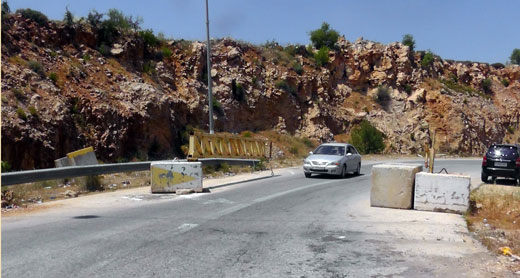
http://www.btselem.org/sites/default/files2/library/20120705_ein_yabrud.jpgSection of road linking ‘Ein Yabrud to Route 60 opened to Palestinian traffic. Photo: Iyad Hadad, B'Tselem, 7 May 2012

In 2012, the military and the Civil Administration removed several restrictions that had been imposed on Palestinians’ movement in various areas of the West Bank.

During the second intifada, the militaryestablished dozens of checkpoints in the West Bank and placed hundreds of physical obstacles to movement of Palestinians throughout the area — mounds of earth, massive cement blocks, and ditches. In addition, Israel began construction of the Separation Barrier. These restrictions on movement were unprecedented in the history of the Israeli occupation, both in their scope and duration and in the severity of their impact on the daily routines of Palestinians in the West Bank.

In recent years, Israel has scaled back these restrictions, and Palestinians can now travel relatively freely within the West Bank.

However, the military continues to treat Palestinians’ freedom of movement as a privilege rather than as a right. While many checkpoints are now open for free passage, the infrastructure has been left in place in some of them, allowing for their reactivation on short notice. In addition to these checkpoints, which are intermittently manned, there are still about 16 permanently manned checkpoints scattered throughout the West Bank, as well as 16 checkpoints restricting Palestinian movement in the center of Hebron. Likewise, hundreds of physical obstacles are still standing, and the military also periodically erects ‘flying checkpoints’ at locations where there is no checkpoint infrastructure. The random activation of checkpoints across the West Bank makes it impossible for Palestinians wishing to travel between towns and villages to predict where they may come across a checkpoint and how long the trip could take.

In addition, Israel denies all Palestinians, except those who hold special permits, access to specific areas of the West Bank such as East Jerusalem and the land west of the Separation Barrier, and severely restricts their access to other areas, such as the center of Hebron.

To view maps legend click here.

Removal of the restrictions on access to the Jordan Valley, October 2012

On 15 October 2012, the Association for Civil Rights in Israel (ACRI) reported that, as of 3 October 2012, the military had decided to cancel the restrictions on Palestinians’ movement between the Jordan Valley and the rest of the West Bank. 

The military began restricting movement in the Jordan Valley in the late 1990s and imposed much harsher limitations in 2005, when Israel began implementing its policy to isolate the area from the rest of the West Bank and to limit Palestinians’ ability to be in the area. For several years, Israel allowed entry to the Jordan Valley only to Palestinians who were registered as residents of the area on their ID cards, were owners of land there, or were employed there. In recent years, Israel has gradually eased the terms of these restrictions. According to the military’s notification to ACRI, it has now decided to remove them entirely. (View map legend)

The primary means of restriction was two checkpoints: Hamra and Tayasir. B’Tselem has found that the instructions to lift restrictions were already being implemented at the Hamra checkpoint in October 2012, whereas soldiers at the Tayasir checkpoint did not begin implementation until December 2012. Furthermore, passengers are still required to exit their vehicles and undergo a physical security check before the vehicle may cross the Hamra checkpoint.

Northern entrance to Jericho, opened in July 2012

In July 2012, in honor of Ramadan, the military removed concrete blocks that it had placed north of Jericho at the beginning of the second intifada. For twelve years, this roadblock had prevented entrance to Jericho from the north, forcing Palestinians wishing to move between Jericho and the central and northern West Bank to use the city’s southern entrance, which added about 15 km to their journey. (View map legend)


Salfit-Ariel road, opened partially in April 2012

In 2000, a 1.7 km-long section of road stretching from the western entrance to the Ariel settlement to the northern entrance to the town of Salfit was closed to Palestinian traffic and barricaded on either side by concrete blocks and earth mounds.(View map legend)

In September 2011, the Civil Administration removed the roadblocks in coordination with the Palestinian DCO and opened the road to some Palestinian traffic, allowing passage of buses and taxis registered in advance between the hours of 6 A.M. and 10 P.M. only, and ambulances. In April 2012, the restrictions were further reduced: public transportation vehicles, ambulances, firefighting vehicles and vehicles belonging to the Salfit City Council and the Palestinian DCO are now permitted to use the road, without prior registration. The Civil Administration has stated its intention to open the road to all traffic at a later date.

A section of the old Nablus Road (Route 466, linking al-Jalazun and Ramallah), from Beit El to al-Jalazun, opened in April 2012

On Monday, 31 April 2012, the military opened the northern section of Route 466 – some two kilometers – to Palestinian traffic. The section runs close to the western fence of the Beit El settlement. The southern part of the road – approximately 800 meters long – was opened to Palestinian traffic about a year ago. This part begins in northern al-Bireh (next to the City Inn Hotel) and runs some 30 meters away from the old, southwestern entrance to Beit El. The entire road, which the military closed at the beginning of the second intifada, is now open to Palestinian traffic. (View map legend)

This road serves some 10,000 people living in the villages east of Ramallah and in ‘Ein Siniya, Jifna and the al-Jalazun refugee camp. Closing the road forced residents to take a roundabout route at least 5 km long, instead of traveling 2.5 km on Route 466.

Zawata-Ajnisinya road, 2 km long, opened in March 2012

This road is an old route that connects the villages of Zawata and Ajnisinya and is used by Zawata residents to access their farmland. At the beginning of the second intifada, the military blocked entrance to the road with an earth mound, claiming that it was supposed to serve military purposes only: linking the military camp on Mount Ebal, north of Nablus, with the settlement of Shavei Shomeron. Palestinians were thereby forced to detour 8 km via ‘Asirah a-Shamaliyah to reach the small village of Ajnisinya (pop. 500).

In 1998, the Palestinian nonprofit organization al-‘Ofoq began building 200 housing units for teachers from Nablus on Zawata land lying north of the village. The project was scheduled for completion in 2003 but, following closure of the road in 2000, construction was halted. Now, the reopened road requires extensive repair to enable vehicles to use it, particularly the heavy trucks needed to resume construction of the housing project. (View map legend)

Main entrance to Beit Dajan (Route 557), opened in March 2012

Route 557 (known also as the “Madison Route”), which leads from the Hawara checkpoint to the settlements of Itamar and Elon Moreh, was closed to Palestinian traffic at the beginning of the second intifada. Apparently, the military designated it for exclusive use by settlers and their guests. Palestinians were forbidden even to cross the road by car.

This prohibition isolated over 14,000 Palestinians living in Beit Furik and Beit Dajan, and forced them to cross checkpoints within Nablus in order to reach villages lying west of Route 557. When traveling to the central or southern West Bank, they had to cross Route 557 on foot, go through the Beit Furik checkpoint at the entrance to Nablus and then cross the Hawara checkpoint (opened to Palestinian traffic in June 2009) to go south, or alternatively take a long detour via the adjacent villages of Salem, Deir al-Hatab and ‘Azmut. On 10 February 2011, the military began allowing Palestinian vehicles through the Beit Furik checkpoint, which eased access to Nablus and to the villages west of the road. On 20 March 2012, two sections of the road were opened to Palestinian traffic: from the entrance to Beit Dajan to the Beit Furik checkpoint, and from the Hawara checkpoint to the ‘Awarta checkpoint, which made movement somewhat easier for Palestinians. However, two other parts of the road – from the entrance to Beit Dajan to the Elon Moreh settlement, and from the ‘Awarta checkpoint to the Beit Furik checkpoint – are still closed to Palestinians. (View map legend)

The Shufa-Tulkarm road (5615), opened in March 2012

The village of Shufa, in the Tulkarm district, is home to 2,000 people living in two distinct sections — the southeast and the northwest, the latter known as ‘Izbat Shufa. The two parts of the village are linked by a short road (Route 5615), which is crossed by the road that leads to the Avne Hefetz settlement. This road used to be the main route from Shufa to Tulkarm. (View map legend)

In 2001, when the second intifada began, the military placed roadblocks at all four exits from the village: (1) at the exit leading to ‘Izbat Shufa (Route 5615), (2) at the entrance to ‘Izbat Shufa, (3) at the exit to the main road (Route 557), and (4) at the northeast exit leading to the residents’ agricultural lands and to Kafr al-Labad. The village was completely surrounded, with no exit for vehicles. The roadblocks even separated members of the same family living in different sections of the village. To reach their farmland and the urban hub at Tulkarm, where most of the residents work and where they receive health, education, and commercial services, residents in the southeastern part of the village were forced to surreptitiously remove the blockade on the dirt road leading to Kafr al-Labad. After residents had done so several times, with the military rebuilding it each time, the military gave in, halfway through the previous decade, and allowed this dirt road to remain open. Thus residents could reach their district capital via a long, roundabout route, through Kafr al-Labad and the ‘Anabta checkpoint.

In 2006, the military removed the roadblock at the exit to Route 557 and replaced it with an iron gate, left open for traffic. However, village residents were still unable to use the road to reach Tulkarm as the al-Kafriyat checkpoint is located on it, prohibiting Palestinians from crossing.

In 2010, HaMoked-Center for the Defence of the Individual petitioned the High Court, demanding removal of the remaining roadblocks. The High Court decision of February 2012 accepted the military's proposal to permit only a limited number of vehicles, based on a list, to cross the al-Kafriyat checkpoint and reach Tulkarm via Route 557, without removing the roadblocks on Route 5615. However, this decision was never implemented. On 28 March 2012, on its own initiative and without prior notice, the military removed two of the roadblocks on Route 5615, which had divided Shufa from ‘Izbat Shufa and had prevented travel on this road from Shufa to Tulkarm.

Gate in the a-Tur checkpoint/Shomronim roadblock, opened in March 2012 2012

This gate, separating Mount Gerizim from Nablus, was placed on the road linking the Samaritan community of Kiryat Luza with the city of Nablus. When the second intifada began, the gate was installed to prevent Palestinian access to the Har Bracha settlement. The road continued to serve Samaritans, who were permitted to cross the gate at any hour, as were the members of 13 Palestinian families also living in Kiryat Luza, who were permitted to cross between 6 A.M. and 10 P.M.

Opening the gate has enabled residents of Nablus to travel to the Samaritan community for employment or for other reasons, which they have been unable to do since the start of the second intifada. Meanwhile, Palestinians today still avoid using the rest of the road because they are afraid to pass by the Har Bracha settlement. (View map legend)

Section of road linking ‘Ein Yabrud to Route 60 (Route 449), opened in January 2012

In January 2012, a 100-meter section was opened to Palestinian traffic on the road connecting Palestinian communities in the Ramallah area located east and west of Route 60. This section of the road was closed at the start of the second intifada, and since then has been opened to Palestinian traffic several times and closed again following a few occasions of stone-throwing and shooting at settlers. The road serves some 38,000 residents of 13 villages and the residents of Ramallah itself. It enables people living in communities to the west of it to travel to the northern West Bank, the Jordan Valley and Jericho, and allows residents of the villages east of it to reach their urban center in Ramallah. The communities directly affected by the closing of the road are: Dura al-Qar’, Rammun, al-Mazra’ah a-Sharqiyah, ‘Ein Yabrud, Deir Jarir, Kfar Malik, Silwad, Silwad refugee camp, a-Taybah, Burqah, Yabrud, Beitin, Deir Dobwan. (View map legend)

The road is also the only access for residents of ‘Ein Yabrud and Silwad to c. 1,000 hectares of the agricultural land they own along the eastern side of Route 60. Adjacent to these lands, the Ofra settlement was built (some of it on land belonging to Silwad and ‘Ein Yabrud). Although the road is now open to traffic, Palestinian farmers are still not permitted to reach their land without advance coordination with the Civil Administration, which maintains a list of names of landowners and allows them access only during the olive harvest and in plowing season.

Suggested items

Apartheid

This is apartheid: The Israeli regime promotes and perpetuates Jewish supremacy between the Mediterranean Sea and the Jordan River

Today, B’Tselem published a new position paper that details how the Israeli regime enacts in all the territory it controls (Israeli sovereign territory, East Jerusalem, the West Bank, and the Gaza Strip) an apartheid regime. One organizing principle lies at the base of a wide array of Israeli policies: advancing and perpetuating the supremacy of one group – Jews – over another – Palestinians. In the position paper B’Tselem rejects the perception of Israel as a democracy (inside the Green Line) that simultaneously upholds a temporary military occupation (beyond it). B’Tselem reached the conclusion that the bar for defining the Israeli regime as an apartheid regime has been met after considering the accumulation of policies and laws that Israel devised to entrench its control over Palestinians. The key tool Israel uses to implement the principle of Jewish supremacy is engineering space geographically, demographically and politically. Jews go about their lives in a single, contiguous space where they enjoy full rights and self-determination. In contrast, Palestinians live in a space that is fragmented into several units, each with a different set of rights – given or denied by Israel, but always inferior to the rights accorded to Jews. The Israeli regime pursues this organizing principle in four major areas: Land – Israel works to Judaize the entire area, treating land as a resource chiefly meant to benefit the Jewish population. Since 1948, Israel has taken over 90% of the land within the Green Line and built hundreds of communities for the Jewish population. Since 1967, Israel has also enacted this policy in the West Bank, building more than 280 settlements for some 600,000 Jewish Israeli citizens. Israel has not built a single community for the Palestinian population in the entire area stretching from the Mediterranean Sea and the Jordan River (with the exception of several communities built to concentrate the Bedouin population after dispossessing them of most of their property rights). Citizenship – Jews living anywhere in the world, their children and grandchildren – and their spouses – are entitled to Israeli citizenship. In contrast, Palestinians cannot immigrate to Israeli-controlled areas, even if they, their parents or their grandparents were born and lived there. Israel makes it difficult for Palestinians who live in one of the units it controls to obtain status in another, and has enacted legislation that prohibits granting Palestinians who marry Israelis status within the Green Line. Freedom of movement – Israeli citizens enjoy freedom of movement in the entire area controlled by Israel (with the exception of the Gaza Strip) and may enter and leave the country freely. Palestinian subjects, on the other hand, require a special Israeli-issued permit to travel between the units (and sometimes inside them), and exit abroad also requires Israeli approval. Political participation – Palestinian citizens of Israel may vote and run for office, but leading politicians consistently undermine the legitimacy of Palestinian political representatives. The roughly five million Palestinians who live in the Occupied Territories, including East Jerusalem, cannot participate in the political system that governs their lives and determines their future. They are denied other political rights as well, including freedom of speech and association. In the entire area, control over these aspects of life lies entirely in Israel’s hands – the sole power determining the population registry; land allocation; voter rolls; and the right (or denial thereof) to travel within, enter or exit any part of the area. The Israeli regime has grown increasingly explicit regarding its Jewish supremacist ideology, a process that has seen two major unmasking milestones in recent years. One was the enactment of Basic Law: Israel – the Nation State of the Jewish People, which declares the distinction between Jews and non-Jews fundamental and legitimate, and permits institutional discrimination in land management and development, housing, citizenship, language and culture. The second came in the form of official statements regarding formal annexation of more parts of the West Bank, attesting to Israel’s long-term intentions and debunking claims of “temporary occupation.” B’Tselem stresses that the military occupation has not ended: Palestinians in the West Bank remain its direct subjects, while in the Gaza Strip they live under its effective control, exerted from the outside. At the same time, casting Israel as a “democracy” on one side of the Green Line, while it is “temporarily” occupying millions of people on the other side, is divorced from reality. This depiction ignores the fact that this state of affairs has been in place for over fifty years. It fails to take into consideration the hundreds of thousands of Jewish settlers living east of the Green Line. It glosses over the de-jure annexation of East Jerusalem and the de-facto annexation of the rest of the West Bank. These facts lead to the conclusion that these are not two parallel regimes, but a single one, governing the entire area and all the people living in it. B’Tselem’s Executive Director, Hagai El-Ad: “The fundamental tenets of Israel’s regime, although already implemented for many years, have recently grown more explicit. This happened both with the discussion of de jure annexation after decades of de facto annexation, and with the enactment of the Nation State Basic Law, which took the existing discrimination against Palestinians and turned it into an open constitutional principle. Israel is not a democracy that has a temporary occupation attached to it: it is one regime between the Jordan River and the Mediterranean Sea, and we must look at the full picture and see it for what it is: apartheid. This sobering look at reality need not lead to despair, but quite the opposite. It is a call for change. After all, people created this regime, and people can change it.”

12 January 2021

A regime of Jewish supremacy from the Jordan River to the Mediterranean Sea: This is apartheid

Apartheid

A regime of Jewish supremacy from the Jordan River to the Mediterranean Sea: This is apartheid

More than 14 million people, roughly half of them Jews and the other half Palestinians, live between the Jordan River and the Mediterranean Sea under a single rule. The common perception in public, political, legal and media discourse is that two separate regimes operate side by side in this area, separated by the Green Line. One regime, inside the borders of the sovereign State of Israel, is a permanent democracy with a population of about nine million, all Israeli citizens. The other regime, in the territories Israel took over in 1967, whose final status is supposed to be determined in future negotiations, is a temporary military occupation imposed on some five million Palestinian subjects. Over time, the distinction between the two regimes has grown divorced from reality. This state of affairs has existed for more than 50 years – twice as long as the State of Israel existed without it. Hundreds of thousands of Jewish settlers now reside in permanent settlements east of the Green Line, living as though they were west of it. East Jerusalem has been officially annexed to Israel’s sovereign territory, and the West Bank has been annexed in practice. Most importantly, the distinction obfuscates the fact that the entire area between the Mediterranean Sea and the Jordan River is organized under a single principle: advancing and cementing the supremacy of one group – Jews – over another – Palestinians. All this leads to the conclusion that these are not two parallel regimes that simply happen to uphold the same principle. There is one regime governing the entire area and the people living in it, based on a single organizing principle. When B’Tselem was founded in 1989, we limited our mandate to the West Bank (including East Jerusalem) and the Gaza Strip, and refrained from addressing human rights inside the State of Israel established in 1948 or from taking a comprehensive approach to the entire area between the Jordan River and the Mediterranean Sea. Yet the situation has changed. The regime’s organizing principle has gained visibility in recent years, as evidenced by the Basic Law: Israel – the Nation State of the Jewish People passed in 2018, or open talk of formally annexing parts of the West Bank in 2020. Taken together with the facts described above, this means that what happens in the Occupied Territories can no longer be treated as separate from the reality in the entire area under Israel’s control. The terms we have used in recent years to describe the situation – such as “prolonged occupation” or a “one-state reality” – are no longer adequate. To continue effectively fighting human rights violations, it is essential to examine and define the regime that governs the entire area. This paper analyzes how the Israeli regime works to advance its goals in the entire area under its control. We do not provide a historical review or an evaluation of the Palestinian and Jewish national movements, or of the former South Africa regime. While these are important questions, they are beyond the purview of a human rights organization. Rather, this document presents the principles that guide the regime, demonstrates how it implements them and points to the conclusion that emerges from all of this as to how the regime should be defined and what that means for human rights. Divide, separate, rule In the entire area between the Mediterranean Sea and the Jordan River, the Israeli regime implements laws, practices and state violence designed to cement the supremacy of one group – Jews – over another – Palestinians. A key method in pursuing this goal is engineering space differently for each group. Jewish citizens live as though the entire area were a single space (excluding the Gaza Strip). The Green Line means next to nothing for them: whether they live west of it, within Israel’s sovereign territory, or east of it, in settlements not formally annexed to Israel, is irrelevant to their rights or status. Where Palestinians live, on the other hand, is crucial. The Israeli regime has divided the area into several units that it defines and governs differently, according Palestinians different rights in each. This division is relevant to Palestinians only. The geographic space, which is contiguous for Jews, is a fragmented mosaic for Palestinians: Palestinians who live on land defined in 1948 as Israeli sovereign territory (sometimes called Arab-Israelis) are Israeli citizens and make up 17% of the state’s citizenry. While this status affords them many rights, they do not enjoy the same rights as Jewish citizens by either law or practice – as detailed further in this paper. Roughly 350,000 Palestinians live in East Jerusalem, which consists of some 70,000 dunams [1 dunam = 1,000 square meters] that Israel annexed to its sovereign territory in 1967. They are defined as permanent residents of Israel a status that allows them to live and work in Israel without needing special permits, to receive social benefits and health insurance, and to vote in municipal elections. Yet permanent residency, unlike citizenship, may be revoked at any time, at the complete discretion of the Minister of the Interior. In certain circumstances, it can also expire. Although Israel never formally annexed the West Bank, it treats the territory as its own. More than 2.6 million Palestinian subjects live in the West Bank, in dozens of disconnected enclaves, under rigid military rule and without political rights. In about 40% of the territory, Israel has transferred some civilian powers to the Palestinian Authority (PA). However, the PA is still subordinate to Israel and can only exercise its limited powers with Israel’s consent. The Gaza Strip is home to about two million Palestinians, also denied political rights. In 2005, Israel withdrew its forces from the Gaza Strip, dismantled the settlements it built there and abdicated any responsibility for the fate of the Palestinian population. After the Hamas takeover in 2007, Israel imposed a blockade on the Gaza Strip that is still in place. Throughout all of these years, Israel has continued to control nearly every aspect of life in Gaza from outside. Israel accords Palestinians a different package of rights in every one of these units – all of which are inferior compared to the rights afforded to Jewish citizens. The goal of Jewish supremacy is advanced differently in every unit, and the resulting forms of injustice differ: the lived experience of Palestinians in blockaded Gaza is unlike that of Palestinian subjects in the West Bank, permanent residents in East Jerusalem or Palestinian citizens within sovereign Israeli territory. Yet these are variations on the fact that all Palestinians living under Israeli rule are treated as inferior in rights and status to Jews who live in the very same area. Detailed below are four major methods the Israeli regime uses to advance Jewish supremacy. Two are implemented similarly throughout the entire area: restricting migration by non-Jews and taking over Palestinian land to build Jewish-only communities, while relegating Palestinians to small enclaves. The other two are implemented primarily in the Occupied Territories: draconian restrictions on the movement of non-citizen Palestinians and denial of their political rights. Control over these aspects of life lies entirely in Israel’s hands: in the entire area, Israel has sole power over the population registry, land allocation, voter rolls and the right (or denial thereof) to travel within, enter or exit any part of the area. A. Immigration – for Jews only: Any Jew in the world and his or her children, grandchildren and spouses are entitled to immigrate to Israel at any time and receive Israeli citizenship, with all of its associated rights. They receive this status even if they choose to live in a West Bank settlement not formally annexed to Israel’s sovereign territory. In contrast, non-Jews have no right to legal status in Israeli-controlled areas. Granting status is at the almost complete discretion of officials – the Minister of the Interior (within sovereign Israel) or the military commander (in the Occupied Territories). Despite this official distinction, the organizing principle remains the same: Palestinians living in other countries cannot immigrate to the area between the Mediterranean Sea and the Jordan River, even if they, their parents or their grandparents were born and lived there. The only way Palestinians can immigrate to areas controlled by Israel is by marrying a Palestinian who already lives there – as citizen, resident or subject – as well as meeting a series of conditions and receiving Israeli approval.. Israel not only hampers Palestinian immigration but also impedes Palestinian relocation between the units, if the move – in the perception of the regime – would upgrade their status. For instance, Palestinian citizens of Israel or residents of East Jerusalem can easily relocate to the West Bank (although they risk their rights and status in doing so). Palestinians in the Occupied Territories cannot obtain Israeli citizenship and relocate to Israeli sovereign territory, except for in very rare instances, which depend on the approval of Israeli officials. Israel’s policy on family unification illustrates this principle. For years, the regime has placed numerous obstacles before families in which each spouse lives in a different geographical unit. Over time, this has impeded and often prevented Palestinians marrying a Palestinian in another unit from acquiring status in that unit. As a result of this policy, tens of thousands of families have been unable to live together. When one spouse is a resident of the Gaza Strip , Israel allows the family to live there together, but if the other spouse is a resident of the West Bank, Israel demands they relocate permanently to Gaza. In 2003, the Knesset passed a Temporary Order (still in force) banning the issuance of Israeli citizenship or permanent residency to Palestinians from the Occupied Territories who marry Israelis – unlike citizens of other countries. In exceptional cases approved by the Minister of the Interior, Palestinians from the West Bank who marry Israelis may be granted status in Israel – yet it is only temporary and does not entitle them to social benefits. Israel also undermines the right of Palestinians in the Occupied Territories – including East Jerusalem – to continue living where they were born. Since 1967, Israel has revoked the status of some 250,000 Palestinians in the West Bank (East Jerusalem included) and the Gaza Strip, in some cases on the grounds they had lived abroad for more than three years. This includes thousands of East Jerusalem residents who moved mere miles east of their homes to parts of the West Bank that are not officially annexed. All these individuals were robbed of the right to return to their homes and families, where they were born and raised. B. Taking over land for Jews while crowding Palestinians in enclaves: Israel practices a policy of “Judaizing” the area, based on the mindset that land is a resource meant almost exclusively to benefit the Jewish public. Land is used to develop and expand existing Jewish communities and build new ones, while Palestinians are dispossessed and corralled into small, crowded enclaves. This policy has been practiced with respect to land within sovereign Israeli territory since 1948 and applied to Palestinians in the Occupied Territories since 1967. In 2018, the underlying principle was entrenched in Basic Law: Israel – the Nation State of the Jewish People, which stipulates that “the State considers the development of Jewish settlements a national value and will take action to encourage and promote the establishment and reinforcment of such settlements.” Inside its sovereign territory, Israel has enacted discriminatory laws, most notably the Absentee Property Law , allowing it to expropriate vast tracts of Palestinian-owned land, including millions of dunams in communities whose residents were expelled or fled in 1948 and were barred from returning. Israel has also significantly reduced the areas designated for Palestinian local councils and communities, which now have access to less than 3% of the country’s total area. Most of the designated land is already saturated with construction. As a result, more than 90% of land in Israel’s sovereign territory is now under state control. Israel has used this land to build hundreds of communities for Jewish citizens – yet not a single one for Palestinian citizens. The exception is a handful of towns and villages built to concentrate the Bedouin population , which has been stripped of most of its proprietary rights. Most of the land on which Bedouins used to live has been expropriated and registered as state land. Many Bedouin communities have been defined as ‘unrecognized’ and their residents as ‘invaders.’ On land historically occupied by Bedouins, Israel has built Jewish-only communities. The Israeli regime severely restricts construction and development in the little remaining land in Palestinian communities within its sovereign territory. It also refrains from preparing master plans that reflect the population’s needs, and keeps these communities’ areas of jurisdiction virtually unchanged despite population growth. The result is small, crowded enclaves where residents have no choice but to build without permits . Israel has also passed a law allowing communities with admission committees, numbering hundreds throughout the country, to reject Palestinian applicants on grounds of “cultural incompatibility.” This effectively prevents Palestinian citizens from living in communities designated for Jews. Officially, any Israeli citizen can live in any of the country’s cities ; in practice, only 10% of Palestinian citizens do. Even then, they are usually relegated to separate neighborhoods due to lack of educational, religious and other services, the prohibitive cost of purchasing a home in other parts of the city, or discriminatory practices in land and home sales. The regime has used the same organizing principle in the West Bank since 1967 (including East Jerusalem). Hundreds of thousands of dunams, including farmland and pastureland, have been taken from Palestinian subjects on various pretexts and used, among other things, to establish and expand settlements, including residential neighborhoods, farmland and industrial zones. All settlements are closed military zones that Palestinians are forbidden from entering without a permit. So far, Israel has established more than 280 settlements in the West Bank (East Jerusalem included), which are now home to more than 600,000 Jews. More land has been taken to build hundreds of kilometers of bypass roads for settlers. Israel has instituted a separate planning system for Palestinians in the West Bank, chiefly designed to prevent construction and development. Large swathes of land are unavailable for construction, having been declared state land, a firing zone, a nature reserve or a national park. The authorities also refrain from drafting adequate master plans reflecting the present and future needs of Palestinian communities in what little land has been spared. The separate planning system centers on demolishing structures built without permits – here, too, for lack of choice. All this has trapped Palestinians in dozens of densely-populated enclaves, with development outside them – whether for residential or public use, including infrastructure – almost completely banned. C. Restriction of Palestinians’ freedom of movement Israel allows its Jewish and Palestinian citizens and residents to travel freely throughout the area. Exceptions are the prohibition on entering the Gaza Strip, which it defines “hostile territory,” and the (mostly formal) prohibition on entering areas ostensibly under PA responsibility (Area A). In rare cases, Palestinian citizens or residents are permitted to enter Gaza. Israeli citizens can also leave and reenter the country at any time. In contrast, residents of East Jerusalem do not hold Israeli passports and lengthy absence can result in revocation of status. Israel routinely restricts the movement of Palestinians in the Occupied Territories and generally forbids them from moving between the units. Palestinians from the West Bank who wish to enter Israel, East Jerusalem or the Gaza Strip must apply to the Israeli authorities. In the Gaza Strip, which has been blockaded since 2007, the entire population is imprisoned as Israel forbids almost any movement in or out – except in rare cases it defines humanitarian. Palestinians who wish to leave Gaza or Palestinians from other units who wish to enter it must also submit a special application for a permit to the Israeli authorities. The permits are issued sparingly and can only be obtained through a strict, arbitrary mechanism, or permit regime , which lacks transparency and clear rules. Israel treats every permit issued to a Palestinian as an act of grace rather than the fulfillment of a vested right. In the West Bank, Israel controls all the routes between the Palestinian enclaves. This allows the military to set up flying checkpoints, close off access points to villages, block roads and stop passage through checkpoints at will. Furthermore, Israel built the Separation Barrier within the West Bank and designated Palestinian land, including farmland, trapped between the barrier and the Green Line as “the seam zone .” Palestinians in the West Bank are barred from entering this zone, subject to the same permit regime. Palestinians in the Occupied Territories also need Israeli permission to go abroad. As a rule, Israel does not allow them to use Ben Gurion International Airport, which lies inside its sovereign territory. Palestinians from the West Bank must fly through Jordan’s international airport – but can only do so if Israel allows them to cross the border into Jordan. Every year, Israel denies thousands of requests to cross this border, with no explanation. Palestinians from Gaza must go through Egyptian-controlled Rafah Crossing – provided it is open, the Egyptian authorities let them through, and they can undertake the long journey through Egyptian territory. In rare exceptions, Israel allows Gazans to travel through its sovereign territory in an escorted shuttle, in order to reach the West Bank and from there continue to Jordan and on to their destination. D. Denial of Palestinians’ right to political participation Like their Jewish counterparts, Palestinian citizens of Israel can take political action to further their interests, including voting and running for office. They can elect representatives, establish parties or join existing ones. That said, Palestinian elected officials are continually vilified – a sentiment propagated by key political figures – and the right of Palestinian citizens to political participation is under constant attack . The roughly five million Palestinians who live in the Occupied Territories cannot participate in the political system that governs their lives and determines their futures. Theoretically, most Palestinians are eligible to vote in the PA elections. Yet as the PA’s powers are limited, even if elections were held regularly (the last were in 2006), the Israeli regime would still rule Palestinians’ lives, as it retains major aspects of governance in the Occupied Territories. This includes control over immigration, the population registry, planning and land policies, water, communication infrastructure, import and export, and military control over land, sea and air space. In East Jerusalem, Palestinians are caught between a rock and a hard place. As permanent residents of Israel, they can vote in municipal elections but not for parliament. On the other hand, Israel makes it difficult for them to participate in PA elections. Political participation encompasses more than voting or running for office. Israel also denies Palestinians political rights such as freedom of speech and freedom of association. These rights enable individuals to critique regimes, protest policies, form associations to advance their ideas and generally work to promote social and political change. A slew of legislation, such as the boycott law and the Nakba law, has limited Israelis’ freedom to criticize policies relating to Palestinians throughout the area. Palestinians in the Occupied Territories face even harsher restrictions : they are not allowed to demonstrate; many associations have been banned; and almost any political statement is considered incitement. These restrictions are assiduously enforced by the military courts, which have imprisoned hundreds of thousands of Palestinians and are a key mechanism upholding the occupation. In East Jerusalem, Israel works to prevent any social, cultural or political activity associated in any way with the PA. The division of space also hampers a unified Palestinian struggle against Israeli policy. The variation in laws, procedures and rights among the geographical units and the draconian movement restrictions have separated the Palestinians into distinct groups. This fragmentation not only helps Israel promote Jewish supremacy, but also thwarts criticism and resistance. No to apartheid: That is our struggle The Israeli regime, which controls all the territory between the Jordan River and the Mediterranean Sea, seeks to advance and cement Jewish supremacy throughout the entire area. To that end, it has divided the area into several units, each with a different set of rights for Palestinians – always inferior to the rights of Jews. As part of this policy, Palestinians are denied many rights, including the right to self-determination. This policy is advanced in several ways. Israel demographically engineers the space through laws and orders that allow any Jew in the world or their relatives to obtain Israeli citizenship, but almost completely deny Palestinians this possibility. It has physically engineered the entire area by taking over of millions of dunams of land and establishing Jewish-only communities, while driving Palestinians into small enclaves. Movement is engineered through restrictions on Palestinian subjects, and political engineering excludes millions of Palestinians from participating in the processes that determine their lives and futures while holding them under military occupation. A regime that uses laws, practices and organized violence to cement the supremacy of one group over another is an apartheid regime. Israeli apartheid, which promotes the supremacy of Jews over Palestinians, was not born in one day or of a single speech. It is a process that has gradually grown more institutionalized and explicit, with mechanisms introduced over time in law and practice to promote Jewish supremacy. These accumulated measures, their pervasiveness in legislation and political practice, and the public and judicial support they receive – all form the basis for our conclusion that the bar for labeling the Israeli regime as apartheid has been met. If this regime has developed over many years, why release this paper in 2021? What has changed? Recent years have seen a rise in the motivation and willingness of Israeli officials and institutions to enshrine Jewish supremacy in law and openly state their intentions. The enactment of Basic Law: Israel – the Nation State of the Jewish People and the declared plan to formally annex parts of the West Bank have shattered the façade Israel worked for years to maintain. The Nation State basic law, enacted in 2018, enshrines the Jewish people’s right to self-determination to the exclusion of all others. It establishes that distinguishing Jews in Israel (and throughout the world) from non-Jews is fundamental and legitimate. Based on this distinction, the law permits institutionalized discrimination in favor of Jews in settlement, housing, land development, citizenship, language and culture. It is true that the Israeli regime largely followed these principles before. Yet Jewish supremacy has now been enshrined in basic law, making it a binding constitutional principle – unlike ordinary law or practices by authorities, which can be challenged. This signals to all state institutions that they not only can, but must, promote Jewish supremacy in the entire area under Israeli control. Israel’s plan to formally annex parts of the West Bank also bridges the gap between the official status of the Occupied Territories, which is accompanied by empty rhetoric about negotiation of its future, and the fact that Israel actually annexed most of the West Bank long ago. Israel did not follow through on its declarations of formal annexation after July 2020, and various officials have released contradicting statements regarding the plan since. Regardless of how and when Israel advances formal annexation of one kind or another, its intention to achieve permanent control over the entire area has already been openly declared by the state’s highest officials. The Israeli regime’s rationale, and the measures used to implement it, are reminiscent of the South African regime that sought to preserve the supremacy of white citizens, in part through partitioning the population into classes and sub-classes and ascribing different rights to each. There are, of course, differences between the regimes. For instance, the division in South Africa was based on race and skin color, while in Israel it is based on nationality and ethnicity. Segregation in South Africa was also manifested in public space, in the form of a policed, formal, public separation between people based on skin color – a degree of visibility that Israel usually avoids. Yet in public discourse and in international law, apartheid does not mean an exact copy of the former South African regime. No regime will ever be identical. ‘Apartheid’ has long been an independent term, entrenched in international conventions, referring to a regime’s organizing principle: systematically promoting the dominance of one group over another and working to cement it. The Israeli regime does not have to declare itself an apartheid regime to be defined as such, nor is it relevant that representatives of the state broadly proclaim it a democracy. What defines apartheid is not statements but practice. While South Africa declared itself an apartheid regime in 1948, it is unreasonable to expect other states to follow suit given the historical repercussions. The response of most countries to South Africa’s apartheid is likelier to deter countries from admitting to implementing a similar regime. It is also clear that what was possible in 1948 is no longer possible today, both legally and in terms of public opinion. As painful as it may be to look reality in the eye, it is more painful to live under a boot. The harsh reality described here may deteriorate further if new practices are introduced – with or without accompanying legislation. Nevertheless, people created this regime and people can make it worse – or work to replace it. That hope is the driving force behind this position paper. How can people fight injustice if it is unnamed? Apartheid is the organizing principle, yet recognizing this does not mean giving up. On the contrary: it is a call for change. Fighting for a future based on human rights, liberty and justice is especially crucial now. There are various political paths to a just future here, between the Jordan River and the Mediterranean Sea, but all of us must first choose to say no to apartheid.

12 January 2021

Apartheid

A regime of Jewish supremacy from the Jordan River to the Mediterranean Sea

The entire area Israel controls between the Jordan River and the Mediterranean Sea is governed by a single regime working to advance and perpetuate the supremacy of one group over another. By geographically, demographically and physically engineering space, the regime enables Jews to live in a contiguous area with full rights, including self-determination, while Palestinians live in separate units and enjoy fewer rights. This qualifies as an apartheid regime, although Israel is commonly viewed as a democracy upholding a temporary occupation.

12 January 2021