Dear friends,
 In Israel, the Gaza Strip often seems like a distant universe. Since the 2005 "disengagement", life in Gaza has been out of sight and out of mind for most Israelis. In Israel, the Gaza Strip often seems like a distant universe. Since the 2005 "disengagement", life in Gaza has been out of sight and out of mind for most Israelis.
Yet Israel still controls many aspects of daily life there and is, therefore, still responsible for related violations of human rights of Gaza residents. B’Tselem has decided to bring you three examples of this daily reality, so that Gaza and its predicament won’t fall by the wayside. First, Israel controls practically all crossings into and out of the Gaza Strip. It imposes strict restrictions on importing construction material and other goods, as well as a near total ban on exports. These factors contribute to the high unemployment rate and the hardships faced by the younger generation. Second, Rafah Crossing, which is the only way to travel abroad from Gaza, is controlled by Egypt. It does not operate regularly. Even when the crossing is open, goods may not be shipped through it, Gazans cannot use it to reach the West Bank, and going through Egypt to reach other countries entails a long, perilous journey through the Sinai desert. Israel, which prevents regularizing air and sea transport from Gaza, must allow residents to travel abroad by going through its territory. Finally, Israel restricts Palestinian's access to farmland near the Israel-Gaza border fence. This land constitutes a third of all Gazan farmland and is a major source of income. We at B’Tselem will continue to monitor Israel’s influence on life in Gaza, to highlight pertinent aspects, and to demand that Israel uphold its obligations as set out in international law.
Suhair Abdi, Data Coordinator responsible for the Gaza Strip | | | 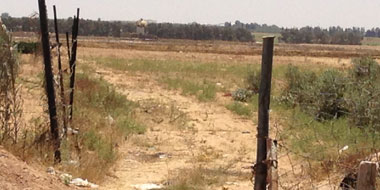 After Operation Pillar of Defense (Nov. 2012), Israel agreed to ease its strict restrictions on Palestinian access to farmland near the Gaza-Israel border, which included live fire at those approaching. In practice, the restrictions and live fire continue. Israel must lift the restrictions and enable farmers to work their land, which constitutes a third of all farmland in Gaza. Until then, the military must refrain from using live fire to enforce the restrictions. | | READ MORE >> | | | 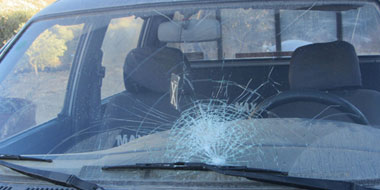 On 26 October 2013, the Na’asan family of the village of al-Mughayir, Ramallah District, went to harvest their olives. Masked settlers came to the grove and attacked them with stones. The family threw stones back. The settlers then assaulted Ghatib Na’asan (75) and his nephew, Yasser Na’asan, who volunteers with B'Tselem's camera project. The latter was hit with an iron bar and broken glass and was injured. Other family members alerted the Israeli security forces, who arrived but made no attempt to apprehend or detain the settlers until police arrived. | | READ MORE >> | | Settlers vandalize Palestinian family's crops in Hebron while soldiers and police stand by |  The Jabers, who live close to the settlement of Kiryat Arba, make a living from growing vegetables near their home. In July 2013, a family daughter who volunteers with B'Tselem's camera project filmed two incidents in which settlers uprooted the family's crops and planted others in their place. The footage shows Israeli security forces standing by and taking no action to stop the vandalism. B'Tselem wrote to the military demanding an examination of the soldiers' conduct. | | READ MORE >> | | |  Khaled al-‘Azayzeh, a B’Tselem field researcher in the Gaza Strip, brings us more of his personal Gaza: "Last episode, I showed you my home, my family, and my local coffee shop. This time, we’ll visit my nephew Muamen. He and his friends are recent university graduates but instead of finding jobs, they’ve joined the most frustrated class of people in Gaza: the unemployed, who are almost 45% of people under 30 here. They are the 'bummer generation'." | | READ MORE >> | | | 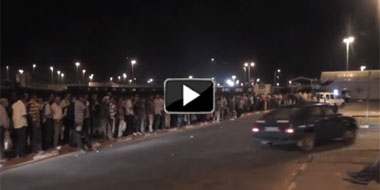 In June 2013, B'Tselem filmed long lines and overcrowding at Tarqumya and Eyal Checkpoints. B'Tselem reported its findings to the Land Crossings Authority at the Ministry of Defense, which rejected the claims. In Sept., B'Tselem visited Tarqumya and Sh’ar Efrayim Checkpoints: laborers still arrive in the middle of the night in order to cross by morning, and report harsh conditions. The Ministry must urgently modify conditions to accommodate the number of work entry permits issued and ensure that workers can enter Israel with dignity. | | READ MORE >> | | | 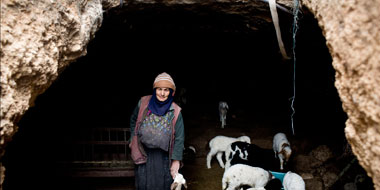 This month, the state announced its agreement to a mediation process proposed by Israel's High Court regarding the plan to expel some 1,000 residents of the South Hebron Hills. The residents filed a petition to the Court via ACRI and Att. Shlomo Lecker against the plan, which rests on the argument that the area is a military firing zone. | | READ MORE >> | | | 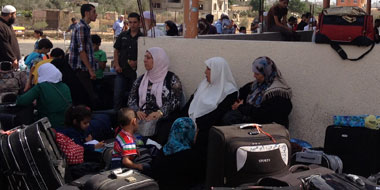 Since the "disengagement", Israel has retained control over all access points to and from Gaza, with the exception of Rafah Crossing. Israel prohibits air or sea travel to and from Gaza, and prohibits Palestinian travel from Israeli airports. Gazans' movement has been even more impeded since July, due to restrictions imposed by Egypt at Rafah. Israel’s control over most access to Gaza means it is responsible for enabling Gazans to fulfill their right to freedom of movement, subject to individualized security inspections. | | READ MORE >> | |
| |



