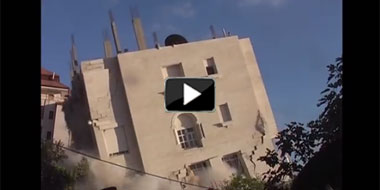
Dear Friends, 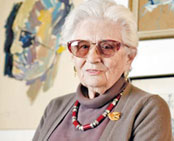 This March, I will be ninety-seven years old. I have had the privilege to live a life interwoven with Israel's historical triumphs and struggles. This March, I will be ninety-seven years old. I have had the privilege to live a life interwoven with Israel's historical triumphs and struggles.It is a great honor for me to be Israeli. It is also a heavy responsibility. In the current reality of occupation in the West Bank children are beaten on the way to police stations, isolated villagers are attacked by violent settlers, Gazan families are denied access to sufficient electricity and fuel. It is a reality of checkpoints and barriers. It is a reality that is untenable and abhorrent. Such snapshots of daily life under occupation are known to Israelis like me thanks to the work of B’Tselem. B'Tselem changes policies, protects communities and brings justice to victims of abuse. Their undeniable impact motivated me to join the B’Tselem Public Council. For nearly twenty-five years, B’Tselem has been on the ground reporting human rights violations from the West Bank and Gaza. Many would prefer to look away. However B’Tselem does not let us escape our obligations to the Palestinians under our control. It continues to demand justice for the neglected and ignored. B’Tselem needs your support in its efforts to bridge the gap between the wrongs of our daily reality and our values of democracy and justice. B’Tselem’s work is essential to our future and a legacy of respect and dignity that we can all be proud of. Warmest regards, | | | 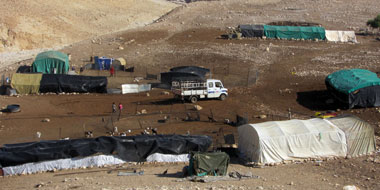 The 25-strong farming and shepherding community of Khirbet 'Ein Karzaliyah faces eviction after the Israeli High Court of Justice accepted the State's position that the site was a military training zone and that they were not permanent residents. According to International Humanitarian Law, protected persons may be expelled only for urgent military necessity or to protect the local population. Expulsion for military training does not meet these requirements. The planned eviction is part of an ongoing policy aimed at expelling shepherd communities in the Jordan Valley and taking over the land. B'Tselem calls on the authorities to allow the residents of Khirbet 'Ein Karzaliyah to remain in their homes. | | READ MORE >> | | | Three times as many people were killed in the West Bank in 2013 as were in 2012. In contrast to the situation from 2003 to 2012 when most Palestinian fatalities occurred in the Gaza Strip, in 2013 the majority of Palestinian fatalities occurred in the West Bank. B’Tselem Director Jessica Montell said, “The sharp rise in fatalities in the West Bank only serves to intensify concern about lack of accountability. Admittedly, criminal investigations are now launched almost automatically, yet the essence of the investigative mechanism remains unchanged. It is slow and cumbersome and decisions are made only years after an incident takes place. Such a mechanism, in which practically no one is held accountable for the killing of Palestinians, does not serve as a deterrent and indicates disregard for human life.” | | READ MORE >> | | |  B’Tselem documented 27 incidents in which Israeli settlers attacked Palestinians, stole olives and vandalized groves. Although the military made arrangements to protect Palestinians and their property during the olive harvest, its preparation was insufficient. In addition, it should be noted that Palestinians’ source of livelihood is harmed also by restrictions on access to groves located in or near settlements. The military must find alternative means of protecting settlements and ensure Palestinians' safe access to cultivate their lands year-round. | | READ MORE >> | | | 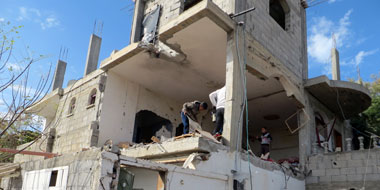 In recent incidents along the Gaza border, Salah Abu Ltayef, a 22-year-old Israeli civilian, was killed by Palestinian gunfire from the Gaza Strip. In response to the incident, Israel attacked several areas in the Gaza Strip. In one strike, a tank fired three shells at the home of the Abu Sbeikhah family, apparently with no warning, killing Hala Abu Sbeikhah (2 years, eight months old) and injuring two of her young cousins and her aunt. The guiding principle that civilians must be shielded from hostilities and never targeted applies to one and all, be they states, armed groups or individuals.. In recent incidents along the Gaza border, Salah Abu Ltayef, a 22-year-old Israeli civilian, was killed by Palestinian gunfire from the Gaza Strip. In response to the incident, Israel attacked several areas in the Gaza Strip. In one strike, a tank fired three shells at the home of the Abu Sbeikhah family, apparently with no warning, killing Hala Abu Sbeikhah (2 years, eight months old) and injuring two of her young cousins and her aunt. The guiding principle that civilians must be shielded from hostilities and never targeted applies to one and all, be they states, armed groups or individuals.. | | READ MORE >> | | |  13 Nov. 2013, Burin: 11 villagers were taken from their beds and brought to the home of the high-school principal, which was converted into a makeshift interrogation center. The questioned men related that no charges were brought against them, and that the “interrogation” was meant to get them to prevent stone-throwing in the village. This severe infringement of civilians’ rights can hardly be justified. B’Tselem wrote to the relevant authorities inquiring whether the raid was part of official policy and, if so, what its legal grounds are. | | READ MORE >> | | | 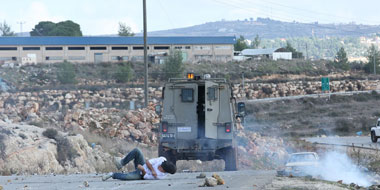 On 5 Dec. 2013, the MAG Corps notified B’Tselem of its decision to close the investigation into the killing of Mustafa Tamimi by a tear-gas canister fired at him in Dec. 2011 arguing that the firing was done "according to the relevant rules and regulations and did not involve any illegality." The decision, two years after the incident, conveys the military’s indifference to the lives of Palestinians in the West Bank, and sends Israeli soldiers and officers the message that they will not be held accountable for killing unarmed civilians. In the meantime, this type of firing continues, and it is only a matter of time before yet another unarmed Palestinian civilian is killed in this way. B’Tselem will demand to see all the investigation material. | | READ MORE >> | |
| |