 Dear Friends, Dear Friends,
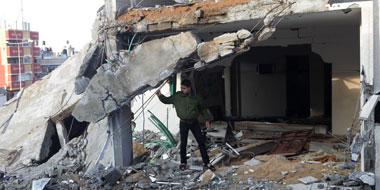
We in Israel are facing a real crisis. Israel's occupation of the West Bank appears unending, while the Gaza Strip grows more isolated and impoverished. The recent fighting in the Gaza Strip and southern Israel, with millions of civilians on both sides paying such a heavy price, only emphasized how far we are from negotiations to resolve this situation. More than four million Palestinians live without the basic rights we in Israel take for granted. While they live only a few miles away, they are separated from us by physical obstacles, as well as mental barriers of fear and prejudice.
In this reality, it is inspiring to see the work of groups like B'Tselem – Israelis who share my conviction that protecting human rights is both necessary and possible. B’Tselem has championed human rights for decades, developing powerful ways to turn research into advocacy and action. And I am grateful for their work. |
|
|
|
|
|
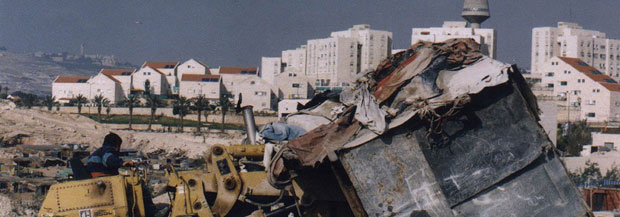
Israel has begun advancing construction in the E-1 area of Ma'ale Adumim, connecting the settlement to Jerusalem. Such a move would have severe implications for human rights in the West Bank, cutting the West Bank in two, exacerbating the isolation of East Jerusalem from the rest of the West Bank and posing a particular threat to Bedouin communities living in the area. Ynetnews published an op-ed on this topic by B'Tselem's director of public outreach Miriam Leedor. |
| READ MORE >> |
|
|
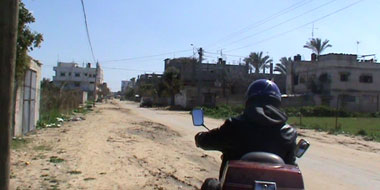
Gaza. Qassam rockets, Hamas, Gilad Shalit, besieged, Cast Lead – all of that is what goes through our minds when we think of Gaza. But what about the people who live there? How do the people who live in Deir al-Balah, or in the refugee camps, feel about the economic situation in Gaza? About security? The political situation? What does an average morning in the Gaza Strip look like? Khaled ‘Azayzeh, a B’Tselem field researcher in the Gaza Strip, shows us his personal Gaza. Episode one, originally published by the Israeli news portal Mako. |
| READ MORE >> |
|
|
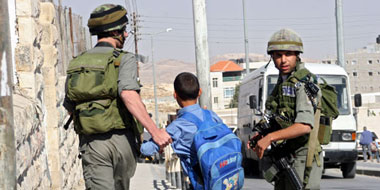
Following a petition to the High Court of Justice contesting the inflated and discriminatory periods of detention applicable to Palestinian minors in the West Bank, the military has amended the relevant military legislation. The change, slated to take effect in April 2013, requires that minors under the age of 14 be brought before a judge within 24 hours of detention and minors aged 14-18 within 48 hours. Currently, military law in the West Bank does not distinguish between minors and adults with respect to duration of detention. The change is welcome news, although the maximum periods of detention are still too long - twice what is permissible inside Israel. |
| READ MORE >> |
|
|
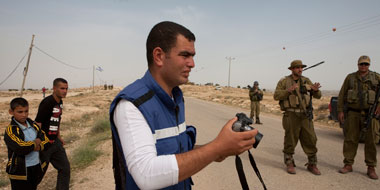
B’Tselem wrote to OC Central Command Major General Nitzan Alon requesting that he issue an immediate notice to Israeli security forces in Hebron, reminding them that B’Tselem employers and volunteers as well as any other photographers must be permitted to document events in the city. B’Tselem’s letter was written in light of an incident in which Israeli soldiers attacked Reuters’ photographers in Hebron, and "accused” them of working for B’Tselem. This month B’Tselem’s Camera Distribution project won the Israeli Documentary Filmmakers Forum award for its unique contribution. |
| READ MORE >> |
|
|
In 2012, the Israeli military removed several of the many restrictions that had been imposed on Palestinians’ movement in various areas of the West Bank since the beginning of the second Intifada. In recent years, Israel has scaled back these restrictions, and Palestinians can now travel relatively freely within the West Bank. However, the military continues to treat Palestinians’ freedom of movement as a privilege rather than as a right. |
| READ MORE >> |
|
|
Nine Israeli organizations issued a joint press release to protest the Israeli military's aggressive treatment of three Palestinian civil society organizations and to demand that all property seized be restored and that the work of civil society organizations—and especially those comprised of human rights defenders – be protected and respected. |
| READ MORE >> |
|
|
B'Tselem sent a letter to the MAG Corps stating that a year is unreasonably long for this kind of investigation. The longer the process is drawn out, the greater the damage to the prospects for an effective criminal proceeding. B'Tselem added that it intends to seek legal remedy if no progress is made in the handling of the case. |
| READ MORE >> |
|
|
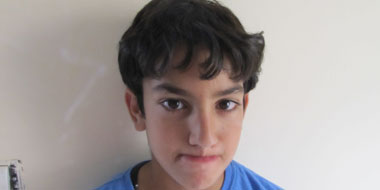
According to testimonies collected by B’Tselem, plainclothes police detained Amir Darwish, at midday on Friday, 12 October 2012, two days before his tenth birthday. The policemen took Amir to a police station, using force against the boy and his mother, who tried to prevent the arrest. Amir was questioned in his mother’s presence for allegedly throwing stones, and was released following the investigation. The minimum age of criminal responsibility in Israel is 12. The arrest or even temporary detention of a minor under the age of 12 is absolutely prohibited. |
| READ MORE >> |
|
|
Yael Stein, Research Director, B’Tselem, in an op-ed originally published 3 December 2012 in the Hebrew Haaretz: Israeli legal experts pronounced lawful all actions taken in Operation Pillar of Defense. That said, they seem to treat international humanitarian law as a combat manual designed to help them identify targets, rather than as guidelines designed to protect civilians from the dire consequences of warfare and to minimize, insofar as possible, harm to civilians. |
| READ MORE >> |
|